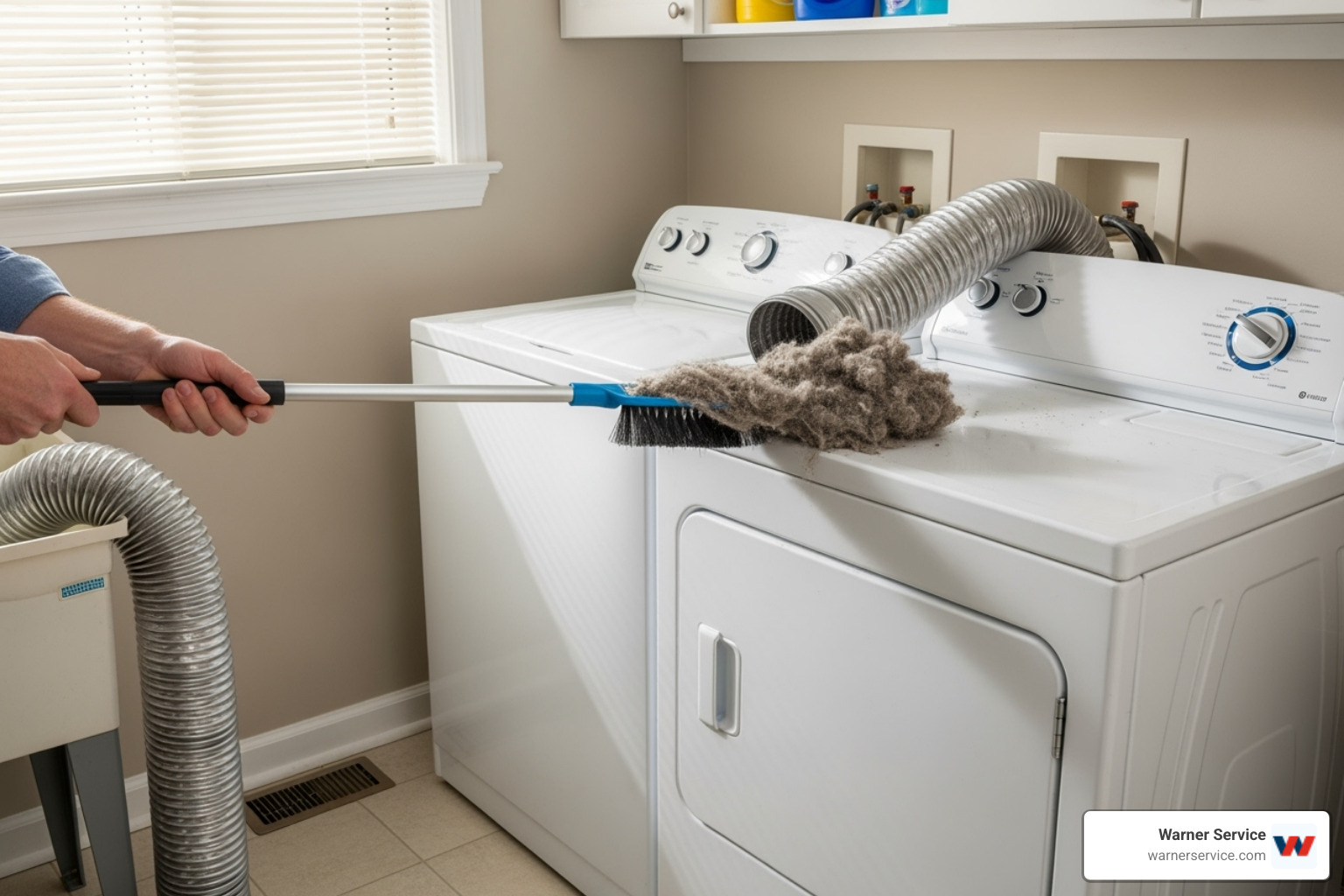
You know the famous quote, out of sight, out of mind? Turns out, that couldn’t be truer for your dryer vents.
Most people don’t think about their dryer vent until something goes wrong. Which is okay, if you think about it, because let’s be honest, no one’s really actively thinking about their dryer vents right this second.
The minute something acts up, you’ll be scurrying around looking for a professional to handle your dryer vent cleaning in Boston. However, the right timing matters more than most people realize, and a little planning goes a long way toward keeping your home safe, your energy bills reasonable, and your dryer running as it should.
Here’s your go-to guide on the best time of year for dryer vent cleaning.
Does the Timing Really Even Matter?
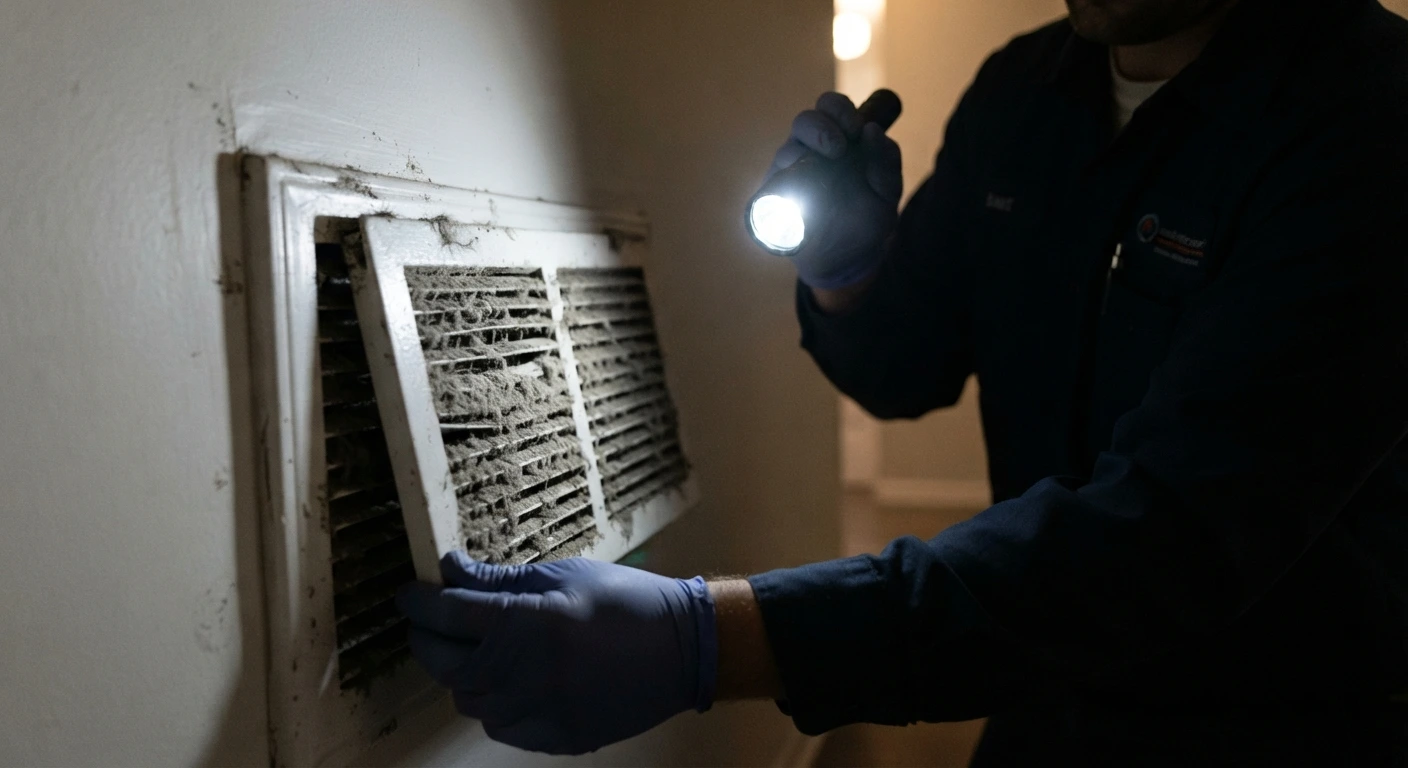
Dryer vents accumulate lint over time. That’s unavoidable.
But the rate of accumulation depends on how often you’re running the dryer, the types of fabric you’re washing, and the length of your vent line. Cold winters mean more layers, more laundry, more dryer cycles, and humid summers mean clothes take longer to dry.
According to the National Fire Protection Association, dryers and washing machines account for roughly 13,820 home structure fires per year in the United States. The leading cause is almost always failure to clean the dryer vent. And January is one of the peak months for these fires. That’s not a coincidence.
So yes, timing matters.
Fall
If you’re only going to do one cleaning per year, fall is the time.
The reason for this is that it sees the year’s heaviest dry use. November through March, you’ll be washing more towels, sweaters, beddings, and linens on cold weekends. Running all of that through a vent that’s already carrying a summer’s worth of lint buildup is like you’re actively asking for trouble!
Fall cleaning gives you a clean slate heading into the winter. It also means you can get a professional to inspect the exterior vent while the weather is still on your side. Vent caps need to be clear of debris, properly sealed, and functioning correctly. If a vent cap is slightly loose or damaged going into winter, you’re looking at pest intrusion, ice formation, and moisture problems.
Winter
Winters bring about heavy use and cold temperatures, which is the recipe for trouble. When warm, moist air from the dryer hits the cold interior of a clogged duct, condensation forms. Lint sticks to that moisture. The buildup thickens faster than it would in warmer months. In extreme cases, that moisture can freeze, partially or fully blocking the vent.
A dryer vent clogged in winter is a fire hazard, but it’s also a carbon monoxide risk if you have a gas dryer. The exhaust has nowhere to go, so the only way for it to go is to back up. Please do not take carbon monoxide poisoning lightly. It is fatal!
Spring
Spring is the second-best time of year to schedule a cleaning.
Since your dryer has been constantly running for four or five months through the worst weather, it’s reasonable to assume lint has accumulated. Spring cleaning clears that out before the vent sits through the summer. This is great because you get ahead of any humidity that could moisten up that lint and make things worse.
Another important thing to check for at this point is birds. Since the springtime is prime nesting season, you’ll be surprised to see just how many nests you’ll find if your vent cap doesn’t have a proper guard.
Summer
Summer usually gets overlooked because dryer use drops. Lighter fabrics, shorter drying times, and more drying outside under the sun mean the vent isn’t being used as often.
But that doesn’t mean you overlook maintenance.
A few things actually get worse in summer, such as the humidity. It affects your vent even when the dryer isn’t running. If moisture gets into the duct, it hardens up the lint so much so that it literally becomes as hard as rock. This is harder to remove and more restrictive to airflow than fresh, dry lint.
Also Read: How to Tell If Your Dryer Vent Cleaning Was Done Right
How Often Should You Actually Clean Your Dryer Vents?
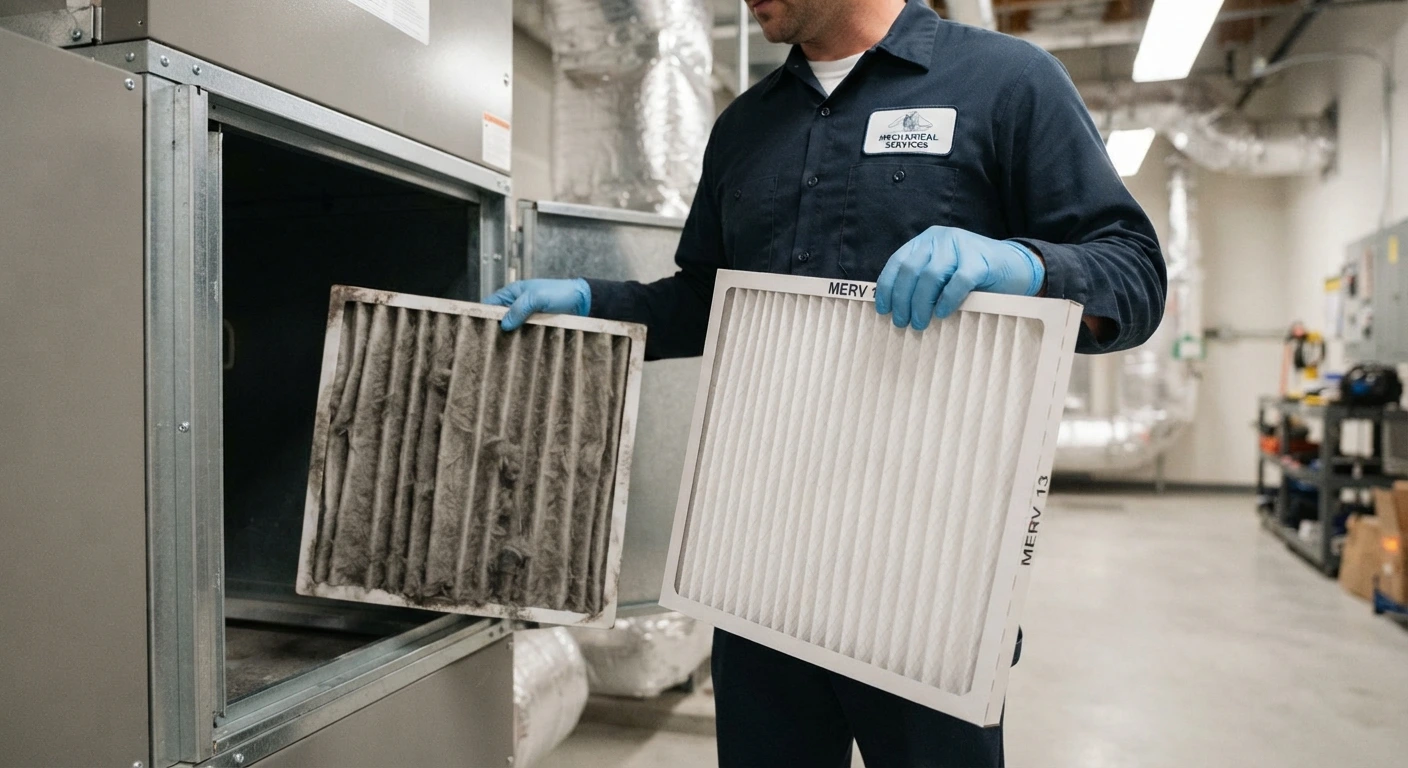
The honest answer here is that it depends on your household, the number of family members, and your living style. The baseline recommendation from the NFPA and most appliance manufacturers is at least once per year. But that’s just the minimum, and if you choose to clean more frequently, you’ll always be better off.
You should clean more frequently if:
- You have a large family and run the dryer daily
- You wash a lot of pet bedding, towels, or heavy fabrics
- Your duct run is long
- You have a gas dryer
Twice a year, in fall and spring, is the right cadence for most households. Once in the fall before the heavy season, once in spring to clear out what winter left behind. That’s what most professionals will recommend, and it’s a good rule of thumb to follow to steer clear of any unwanted trouble.
What Does Professional Cleaning Involve?
If you think cleaning the lint trap is all you need to clean your dryer vent, we’ll have you know that you’re terribly mistaken.
DIY cleaning is most definitely not the same as professional vent cleaning, and homeowners and businesses need to understand why that is and why residential and commercial dryer vent cleaning is important.
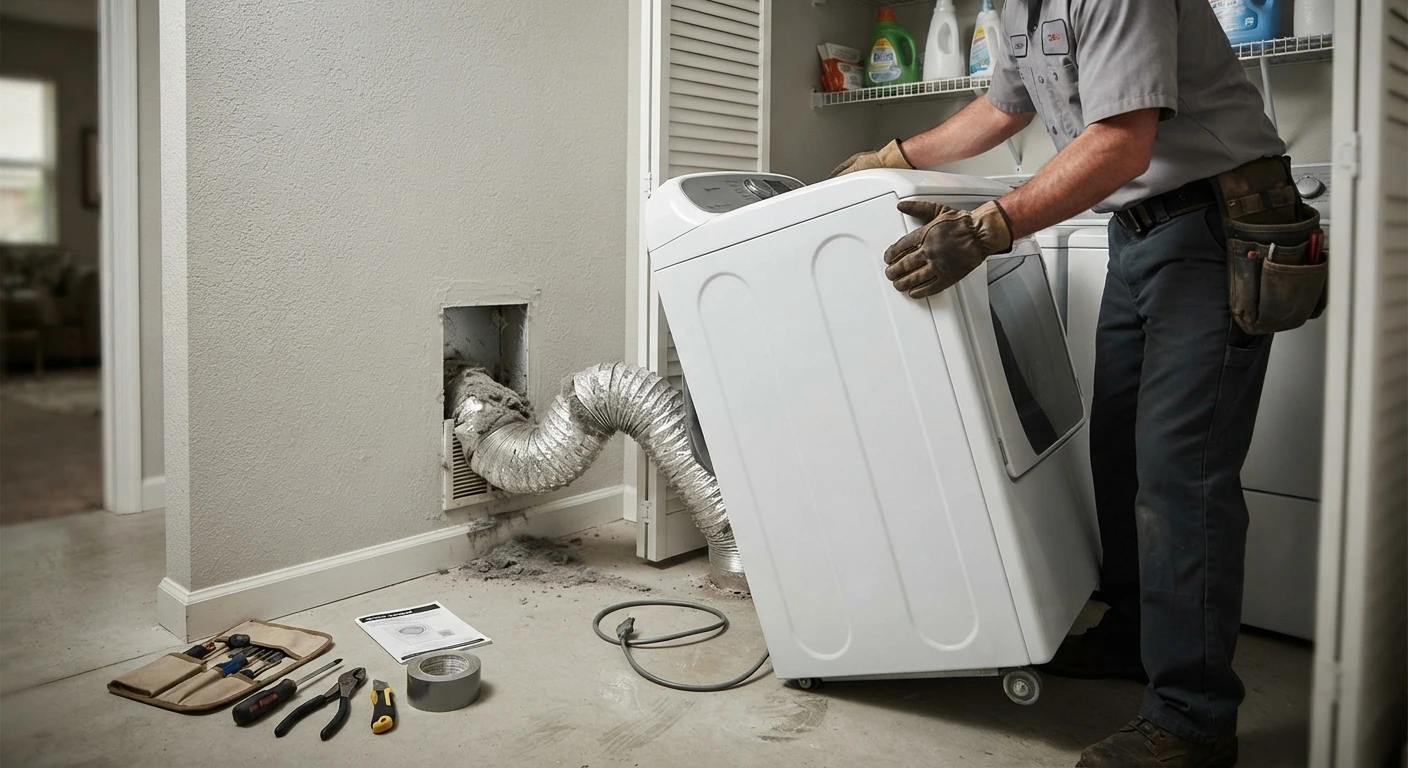
Professional cleaning involves high-end equipment and impeccable expertise to get to and clean every last nook and cranny of your dryer vent. There’s a rotary brush system that cleans out the entire duct, from the dryer connection all the way to the exterior cap. This brush is great because it removes any lint and debris completely. Next comes the high-powered vacuum to extract everything and leave the inside of the dryer vent spick and span.
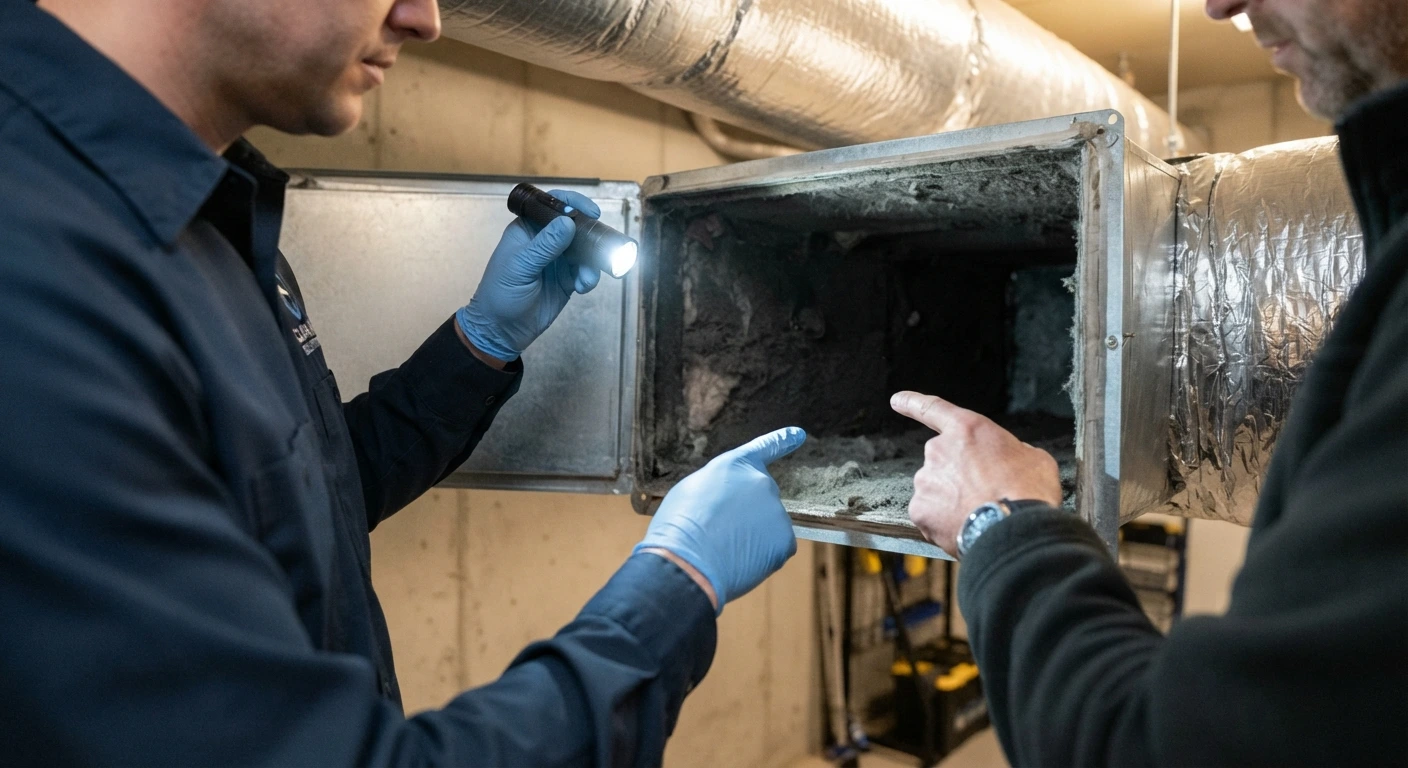
Lastly, everything’s inspected. From the exterior cap to the connections along the duct for leaks or separations. This entire process will take anywhere between 30 and 90 minutes, depending on how dirty your vents are and how complex the entire system is.
DIY vs. Professional Cleaning: What You Can and Can’t Do Yourself
There’s a version of this that homeowners can handle themselves, and a version that absolutely requires a professional. Allow us to walk you through both.
What you can handle on your own
Cleaning the lint trap after every load is a simple but effective way to minimize the problem. But the lint trap screen only captures a portion of the lint that passes through the dryer. The rest moves into the vent duct.
For the duct itself, you can purchase a dryer vent cleaning kit at most hardware stores. These kits can clear the accessible section of the duct closest to the dryer. If your vent run is short and relatively straight, cleaning it yourself allows you to remove surface buildup. And it’s better than doing absolutely nothing between professional visits.
You can also clean the exterior vent cap yourself. This takes just a couple of minutes and should be part of regular home maintenance regardless of professional cleaning schedules.
What you can’t do yourself
Anything beyond the accessible section of the duct requires professional equipment. Most homes in Boston have vents that run through walls, floors, or ceilings before reaching the exterior. These are inaccessible without professional tools.
Professional brushes work at much higher speeds and force, removing material that has been jam-packed and sometimes moistened over months. The vacuum captures everything that’s removed instead of just pushing the dirt further down the line.
Don’t Wait for a Problem to Find You!
We’ve seen people wait around for months, pretend the problem isn’t as bad as it could be, only to regret not having acted quicker! Or worse, they simply don’t know their vents need to be cleaned. Either way, you don’t want to make any of these mistakes.
Dryer vent fires are almost entirely preventable. That’s what makes them frustrating. But it’s high time homeowners start staying on top of this. Between old homes, complex ducts, and cold winters, you need to be cleaning out your vents if nothing else.
This guide is your route to a cleaner dryer vent. Clean your vents out in the fall and the spring to avoid any troubles. You can get them cleaned in the winter or summer, but we’d recommend spending these months watching for symptoms and only acting if there’s something worrisome.
If you’re in Boston and overdue for a cleaning, Delta Clean Air is the team to call. We specialize in dryer vent and air duct cleaning in Boston with the expertise and equipment to do the job right. Whether it’s a routine seasonal cleaning or an urgent inspection, we make the process quick, thorough, and genuinely worth it. Schedule with us before the season changes!