
Your ducts are hidden away behind walls and ceilings, doing their job. Out of sight, out of mind. But something might be happening inside those ducts that could affect your family’s health, just because of moisture. You need regular air duct cleaning.
Humidity is one of those things we notice when it’s extreme. A sticky summer day makes everyone uncomfortable. A dry winter makes your skin crack. But humidity levels inside your home play a huge role in what’s growing and spreading through your HVAC system.
When moisture gets into your air ductwork, it creates conditions that dust and dirt alone can’t create. It turns your air ducts into something more than just dusty tubes. It turns them into breeding grounds for mold, bacteria, and other biological contaminants.
What is the Relationship Between Humidity and Your Ducts
Your HVAC system does more than heat and cool your home. It moves air. Thousands of cubic feet of air pass through your ductwork every single day. That air carries whatever is in it, including moisture.
The EPA recommends keeping indoor humidity levels between 30% and 50% for optimal health and comfort. When humidity rises above this range, problems start to develop. When it stays high for extended periods, those problems get serious.
Here’s what happens when humidity is too high:
Condensation forms on duct surfaces. Your air ducts aren’t perfectly insulated. When warm, humid air meets cooler duct surfaces, water droplets form. This is the same thing that happens when you pour a cold drink on a hot day, and the glass gets wet on the outside. Except in your ducts, that moisture has nowhere to go.
Dust becomes sticky. Dry dust tends to move around. It gets blown through the system and eventually lands on furniture or gets caught by your filter. But when dust gets wet, it sticks to duct surfaces. It builds up. It creates layers that are much harder to remove than dry dust.
Biological growth begins. Mold, mildew, and bacteria need three things to thrive: moisture, warmth, and organic material to feed on. Humid ducts provide all three. The moisture is obvious. The warmth comes from your HVAC system and the natural temperature of your home. And the organic material? That’s the dust, pet dander, skin cells, and other debris that naturally accumulate in ductwork.
Mold can begin growing on surfaces within 24 to 48 hours of moisture exposure. That’s not a lot of time. One humid weekend, one small leak, or one condensation problem can be enough to start a colony.
Where Does Duct Moisture Come From?
Understanding the sources of moisture helps you prevent problems before they start. Humidity in your ducts doesn’t just appear from nowhere. It has specific causes that you can often identify and address.
High Outdoor Humidity
If you live in a humid climate, your home is constantly fighting moisture intrusion. Air leaks around windows, doors, and the building envelope let humid air inside. Your HVAC system then circulates that moisture throughout the ductwork.
Coastal areas, the Southeast, and regions with lots of rainfall deal with this year-round. Cities like Houston, Miami, and New Orleans regularly see outdoor humidity levels above 80%. That humid air finds its way into homes and into duct systems.
Condensation from Temperature Differences
Your air conditioner produces cold air. When that cold air travels through air ducts in unconditioned spaces like attics, crawl spaces, or exterior walls, the temperature difference creates condensation.
Your attic might be 120 degrees on a summer afternoon. The air inside the duct running through that attic might be 55 degrees. That temperature gap causes moisture to form on duct surfaces, both inside and out.
Improper Duct Insulation
Ducts that aren’t insulated are more prone to condensation. Insulation creates a barrier that reduces temperature differences between the duct surface and the surrounding air. Without adequate insulation, condensation happens more easily and more often.
Studies show that properly insulated ducts can reduce condensation-related moisture problems by up to 60%. It’s not a guarantee, but it makes a significant difference.
Plumbing Leaks and Water Intrusion
Sometimes the moisture problem has nothing to do with humidity at all. Leaky pipes, roof leaks, and foundation seepage can all introduce water directly into areas where ducts run. If water drips onto or pools near ductwork, moisture will find its way inside.
A small leak that goes unnoticed for weeks or months can create serious contamination problems in nearby ducts.
Oversized Air Conditioning Systems
This one surprises a lot of people. An air conditioner that’s too big for your home creates humidity problems.
Air conditioners remove humidity as they cool. But they need to run for a certain amount of time to pull moisture from the air effectively. An oversized unit cools the space quickly and then shuts off. It doesn’t run long enough to dehumidify properly. The result is cool air that’s still too humid.
Industry experts estimate that 25-40% of residential HVAC systems are improperly sized. If your AC cycles on and off frequently and your home feels clammy even when it’s cool, your system might be too big.
Also Read: How to Prep Your Home for Duct Cleaning
What Grows in Humid Ducts?
When moisture takes hold in your ductwork, it doesn’t take long for unwanted guests to move in. These biological contaminants are why humidity is such a serious concern for indoor air quality.
Mold and Mildew
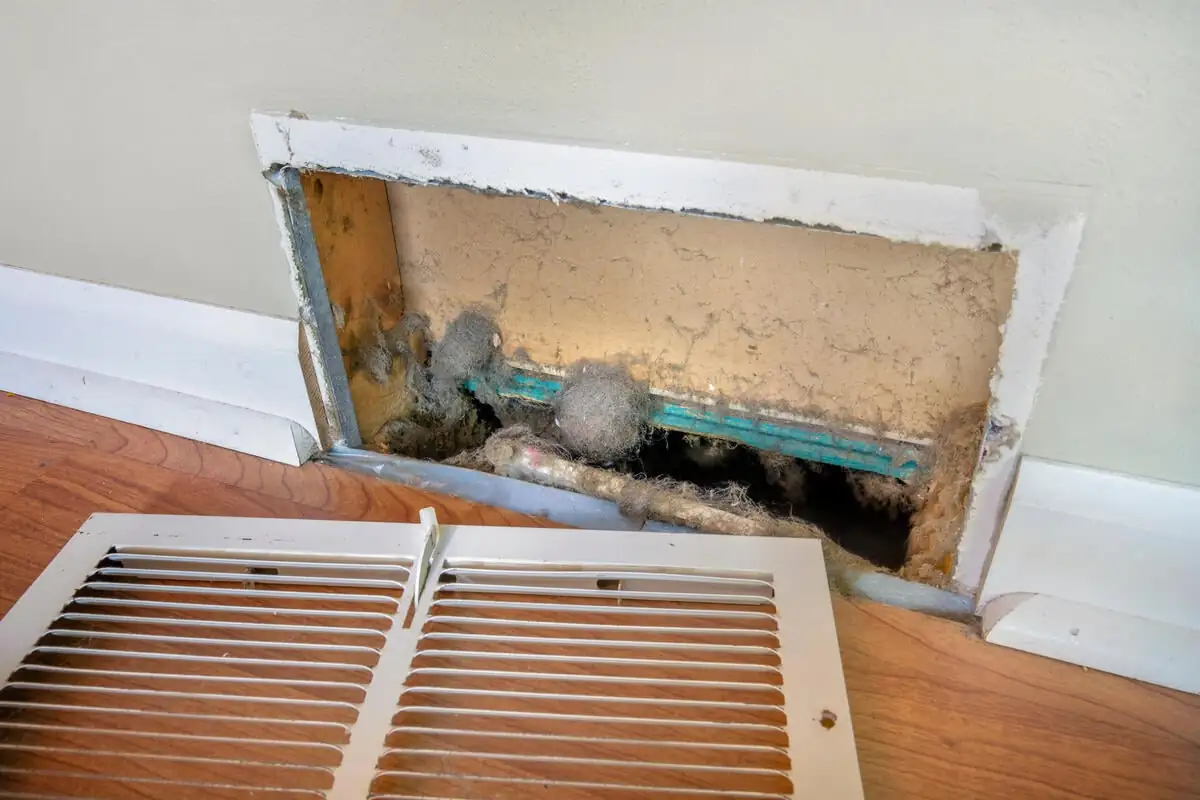
Mold is the most common and most discussed problem. There are thousands of mold species, and many of them grow inside air ducts. Some produce musty odors. Others release spores that trigger allergic reactions. A few produce mycotoxins that can cause more serious health effects.
The CDC reports that mold exposure can cause symptoms including nasal stuffiness, throat irritation, coughing, wheezing, eye irritation, and skin irritation. People with mold allergies or asthma may experience more severe reactions.
The tricky thing about mold is that it often grows where you can’t see it. Inside ducts, behind insulation, in corners where moisture collects. By the time you smell something musty or see visible growth, the problem has usually been developing for a while.
Bacteria
Bacteria thrive in moist environments. Some bacteria that grow in HVAC systems are harmless. Others can cause respiratory infections, particularly in people with weakened immune systems.
Legionella, the bacteria that cause Legionnaire’s disease, is associated with contaminated HVAC and water systems. While more common in commercial buildings with cooling towers, residential systems aren’t immune to bacterial contamination.
Dust Mites
Dust mites love humidity; they absorb moisture from the air. When humidity is high, dust mite populations explode.
While dust mites don’t live inside ducts directly, they thrive in the humid conditions that ducts create. Their waste particles, which are the actual allergen, can get picked up and circulated through the duct system.
Approximately 20 million Americans are allergic to dust mites. For these individuals, high humidity and contaminated ducts can make symptoms significantly worse.
Signs That Moisture Is Affecting Your Ducts
How do you know if humidity is causing problems in your ductwork? There are several warning signs to watch for.
- Musty or earthy odors when the HVAC runs
- Visible mold around vents or registers
- Increased allergy symptoms indoors
- Condensation on duct surfaces or vents.
- Water stains on ceilings or walls near ductwork
- Higher than normal humidity indoors
How to Protect Your Ducts from Moisture Damage
Prevention is always better than dealing with contamination after it happens. There are several steps you can take to keep humidity from turning your ducts into a problem area.
Control Indoor Humidity
Use dehumidifiers in humid climates or during wet seasons. Make sure bathrooms and kitchens have working exhaust fans and that people actually use them. Address any standing water or moisture sources in your home promptly.
A whole-house dehumidifier integrated with your HVAC system can be particularly effective at maintaining consistent humidity levels throughout your home.
Maintain Proper Duct Insulation
Check that ducts in unconditioned spaces are properly insulated. Look for gaps, tears, or areas where insulation has compressed or fallen away. Replace damaged insulation promptly.
Fix Leaks Quickly
Address plumbing leaks, roof leaks, and foundation moisture as soon as you discover them. The longer water sits near ductwork, the greater the chance of contamination.
Service Your HVAC System Regularly
Regular maintenance keeps your system running efficiently. A technician can identify moisture problems before they become serious. They can also verify that your system is sized correctly and dehumidifying properly.
Consider Professional Air Duct Cleaning
When dust and debris build up in your ducts, they provide food for biological contaminants. Regular air duct cleaning removes this material and reduces the chance of growth taking hold.
For ducts that have already been affected by moisture, residential and commercial air duct cleaning is an important first step in remediation. It removes the accumulated contamination and prepares the system for treatment.
The Role of Disinfection in Moisture-Affected Ducts
Sometimes cleaning alone isn’t enough. When biological contamination has taken hold, you need to go beyond removing debris. You need to kill what’s growing there and prevent it from coming back.
This is where air duct disinfection comes in. Disinfection involves applying antimicrobial treatments to duct surfaces after cleaning. These treatments kill mold, bacteria, and other microorganisms that survive the cleaning process.
Cleaning removes contaminants physically. Disinfection addresses them biologically. Both steps are important when dealing with moisture-related contamination.
Air duct disinfection is particularly recommended when:
- There’s visible mold growth in the ductwork
- Musty odors persist after cleaning
- Someone in the home has allergies, asthma, or a compromised immune system
- There’s been significant water damage affecting the ducts
- Testing confirms the presence of harmful biological agents
Not every duct system needs disinfection. But for systems that have been affected by moisture and biological growth, it’s an important part of restoring healthy air quality.
Professional Inspection and Testing
If you suspect moisture problems in your ducts but aren’t sure about the extent, professional inspection can give you answers. Technicians can use cameras to examine duct interiors and identify visible contamination. Air quality testing can detect higher mold spore counts or bacterial presence.
The American Industrial Hygiene Association recommends air quality testing before and after remediation to verify that contamination has been successfully addressed. This provides documentation that the problem has been resolved.
Professional inspection also helps identify the source of moisture. Treating contamination without fixing the underlying moisture problem is like mopping up a flood without turning off the water.
Why This Matters for Your Family
It’s easy to dismiss duct contamination as a minor issue. You don’t see what’s inside them. But what’s inside them affects the air you breathe every day.
Your family spends hours inside your home. You sleep there. You eat there, you relax there. If your indoor air is contaminated with mold spores, bacteria, or other biological matter, that contamination is entering your body with every breath.
Children, elderly family members, and anyone with respiratory conditions are particularly vulnerable. But even healthy adults can experience symptoms from contaminated air. Headaches, fatigue, irritation, and respiratory issues can all stem from poor indoor air quality.
Taking Action to Protect Your Home
At Delta Clean Air, we see the effects of humidity and moisture on ductwork all the time. Homes in our service area deal with seasonal humidity, temperature swings, and all the moisture challenges that come with them. We understand what causes contamination, and we know how to address it properly.
Our team provides thorough air duct cleaning that removes accumulated debris, dust, and biological matter from your ductwork. For systems affected by moisture, we offer air duct disinfection treatments that kill remaining contaminants and help prevent regrowth.
We don’t just clean and leave. We help identify moisture sources and provide recommendations for preventing future problems. Because addressing contamination without fixing the cause isn’t a real solution.
Contact Delta Clean Air today for an inspection. Let us take a look at what’s happening inside your ducts. Your family deserves clean air, and we’re ready to help make that happen.