If you’ve ever wondered what actually happens during professional air duct cleaning, you’re not alone.
Most homeowners understand the why: cleaner air, better HVAC efficiency, reduced allergens, but the how remains a bit of a mystery. What exactly are those technicians doing inside your walls?
The truth is, professional air duct cleaning in Massachusetts involves sophisticated equipment and specialized tools that go far beyond a vacuum cleaner and a flashlight.
Let’s walk through the essential equipment that makes thorough duct cleaning possible, what each tool does, and why it matters for your home’s air quality.
1. Air Compressors
To operate air whips and blow guns, technicians need powerful air compressors. Professional duct cleaning operations typically use portable gasoline-powered units or electric compressors.
But, these aren’t the small pancake compressors you might have in your garage. Professional units deliver 175+ PSI of pressure, which is massive as compared to what your compresser at home offers. This combination provides enough force to effectively agitate even heavy debris while maintaining pressure throughout extended cleaning sessions.
The compressed air serves multiple functions. Blow guns direct concentrated air streams to clean register covers and grills and air skippers navigate through dryer vents and long duct runs, all working together to clean your residential air ducts.
2. Negative Air Machines
The most critical piece of equipment in any professional duct cleaning operation is the negative air machine, which is also sometimes referred to as a vacuum collection device. Don’t be fooled, though; this isn’t your household vacuum.
We’re talking about industrial equipment that creates powerful negative pressure throughout your entire HVAC system.
These systems connect directly to your ductwork and generate a vacuum that pulls air through the system. Professional-grade units deliver anywhere from 4,000 to 15,000 CFM (cubic feet per minute) of airflow. To put that in perspective, a typical household vacuum might deliver 100-200 CFM.
The negative pressure serves two essential functions.
First, it prevents contaminated air from escaping into your living space during cleaning. When technicians disturb the dust and debris inside your ducts, that material becomes airborne. If there’s no vacuum containing it, you’ve just distributed years of accumulated dust throughout your home.
Second, the powerful suction extracts loosened contaminants from the ductwork, pulling them into a containment system.
There are two types of systems:
Truck-mounted equipment is generally more powerful than portable units, with some systems generating 15,000+ CFM. These are mounted on trailers or in service vehicles, with large hoses connecting to your ductwork from outside. Portable units are wheeled into your home and positioned near the ductwork. While typically less powerful (4,000-6,000 CFM), modern portable systems are increasingly sophisticated and work well for most residential applications.
According to NADCA standards, both types can effectively clean HVAC systems when used properly. The choice often depends on access to your ductwork, the size of your system, and whether your ducts are accessible from the outside.
3. HEPA Filters
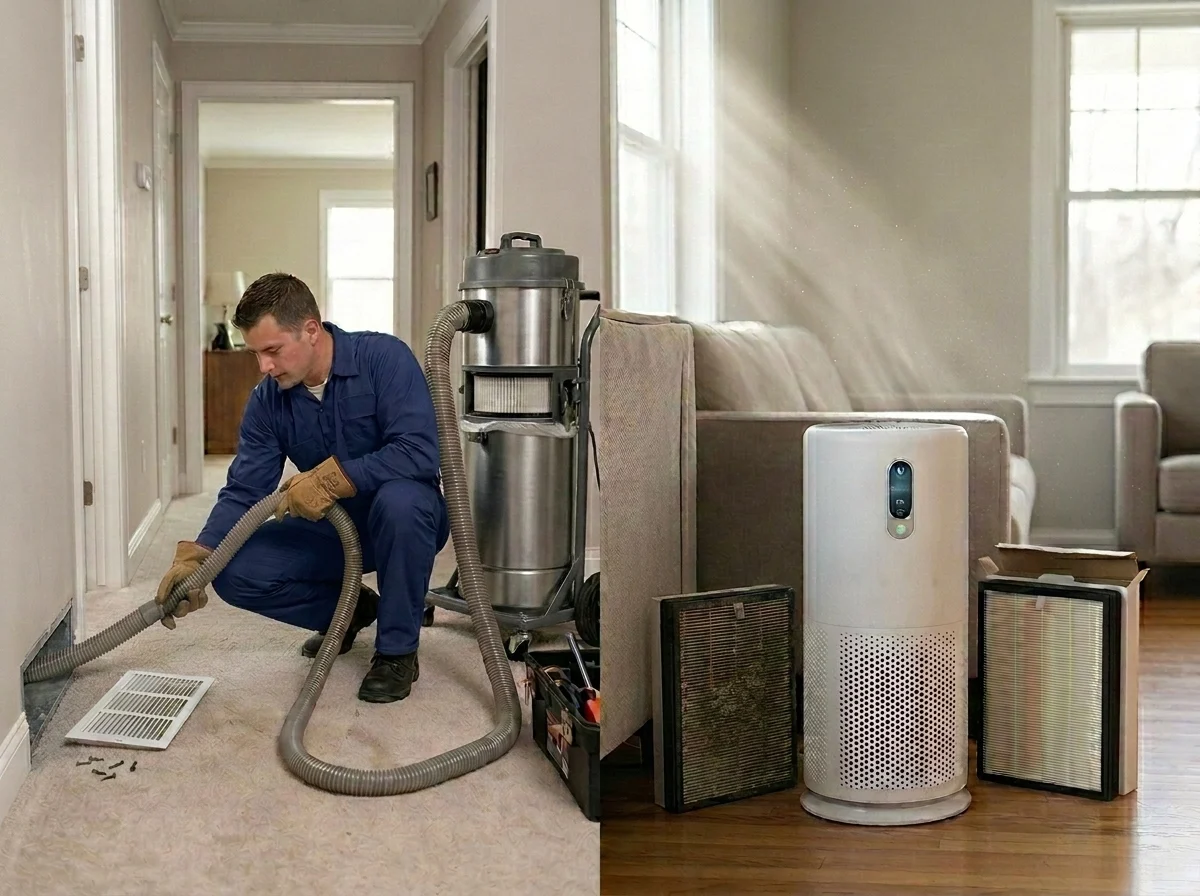
Every professional vacuum system should include HEPA (High Efficiency Particulate Air) filtration.
HEPA filters capture 99.97% of particles as small as 0.3 microns. For context, a human hair is about 50-150 microns in diameter; HEPA filters trap particles several hundred times smaller than that. This includes dust mites, pollen, mold spores, and even bacteria.
Without HEPA filters, the vacuum system would simply recirculate fine particulates back into the air. The dust you can see is actually the least of your concerns; it’s the microscopic particles that affect respiratory health and trigger allergies. Professional equipment typically uses multi-stage filtration. This includes pre-filters that catch larger debris, intermediate filters that handle medium-sized particles, and final-stage HEPA filters that trap the finest contaminants.
Also Read: What Is NADCA-Standard Air Duct Cleaning and Why It Matters
4. Rotary Brush Systems
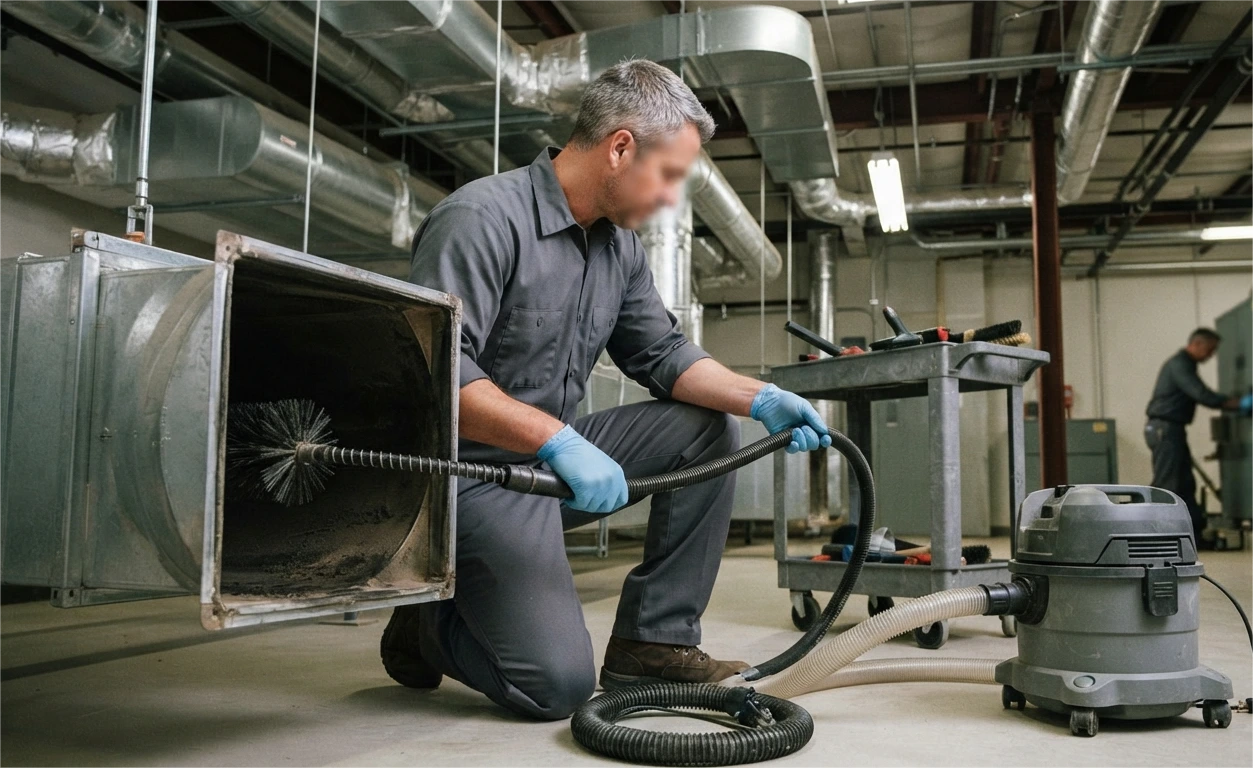
Once negative pressure is established, it’s time to physically dislodge debris from duct surfaces. The most common agitation tool is the rotary brush system.
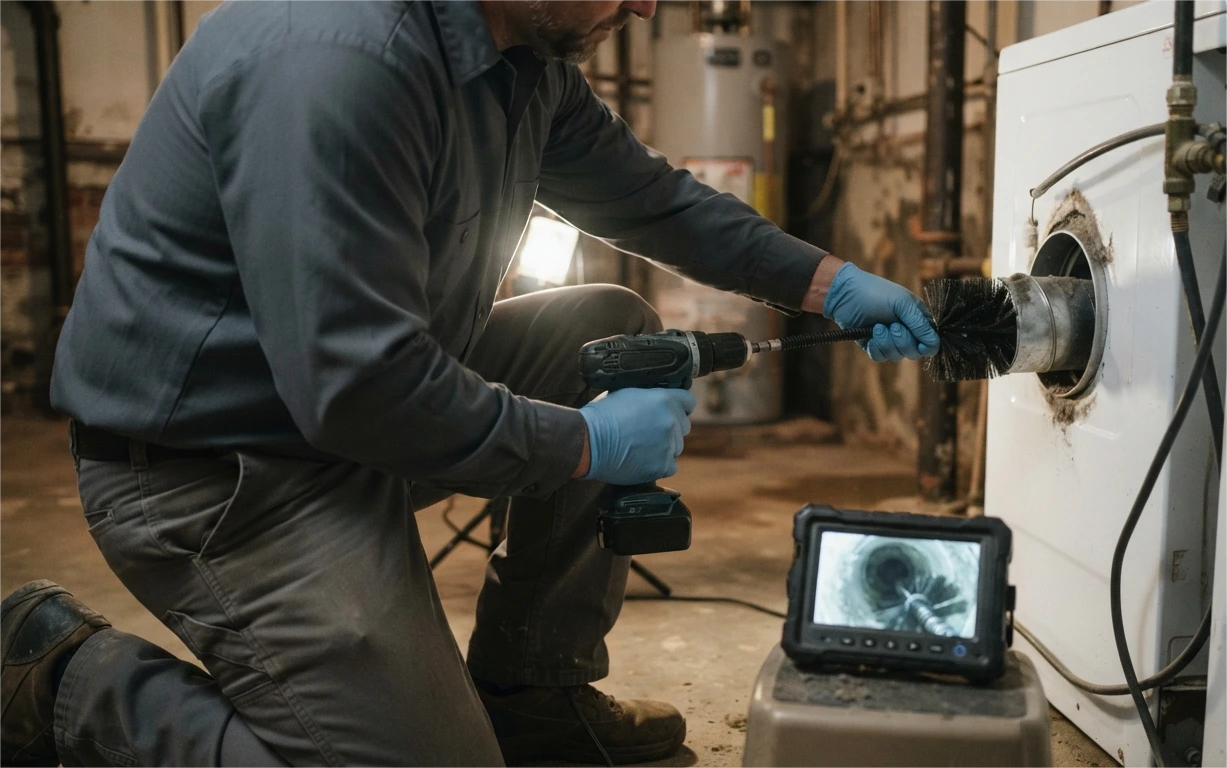
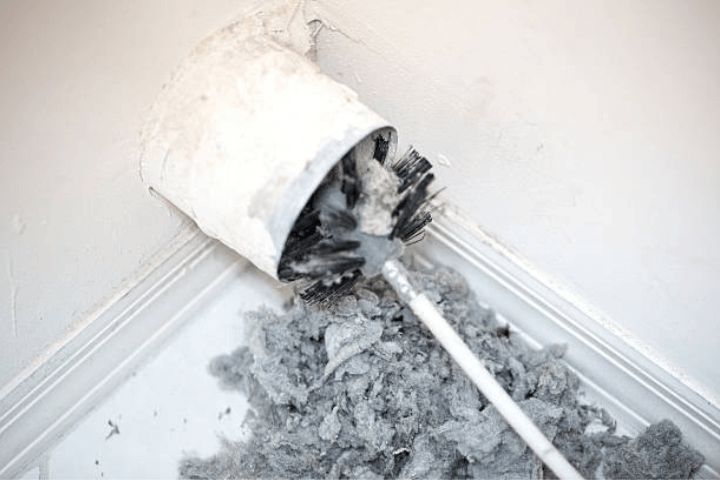
These systems consist of flexible cables with attached rotating brushes, driven by electric motors or cordless drills. The brush head spins at high speed while being fed through the ductwork, scrubbing interior surfaces and breaking loose accumulated dust, dirt, and debris.
But why are these brushes so important?
That’s because simply creating negative pressure isn’t enough. Years of dust create a coating on duct walls that adheres to metal or fiberglass surfaces. Suction alone won’t remove this buildup. The mechanical action of rotating bristles physically scrubs it away, allowing the vacuum system to extract it.
Rotary brushes typically feature flexible designs that navigate bends and turns in ductwork. The brushes themselves come in various sizes to match different duct dimensions.
5. Air Whips and Compressed Air Tools
For rectangular ductwork, tight corners, and areas where brushes can’t reach effectively, compressed air agitation tools, commonly called air whips are used.
These air whips connect to high-pressure air compressors through flexible airlines. The business end consists of multiple flexible rubber tentacles that whip violently inside the duct when air pressure is applied. The whipping, combined with compressed air jets at the tentacle tips, dislodges debris from all surfaces.
Air whips works well in situations where rotating brushes struggle. Rectangular return air plenums, for instance, have corners that circular brushes miss. The flexible tentacles of an air whip reach into these spaces.
6. Inspection Equipment
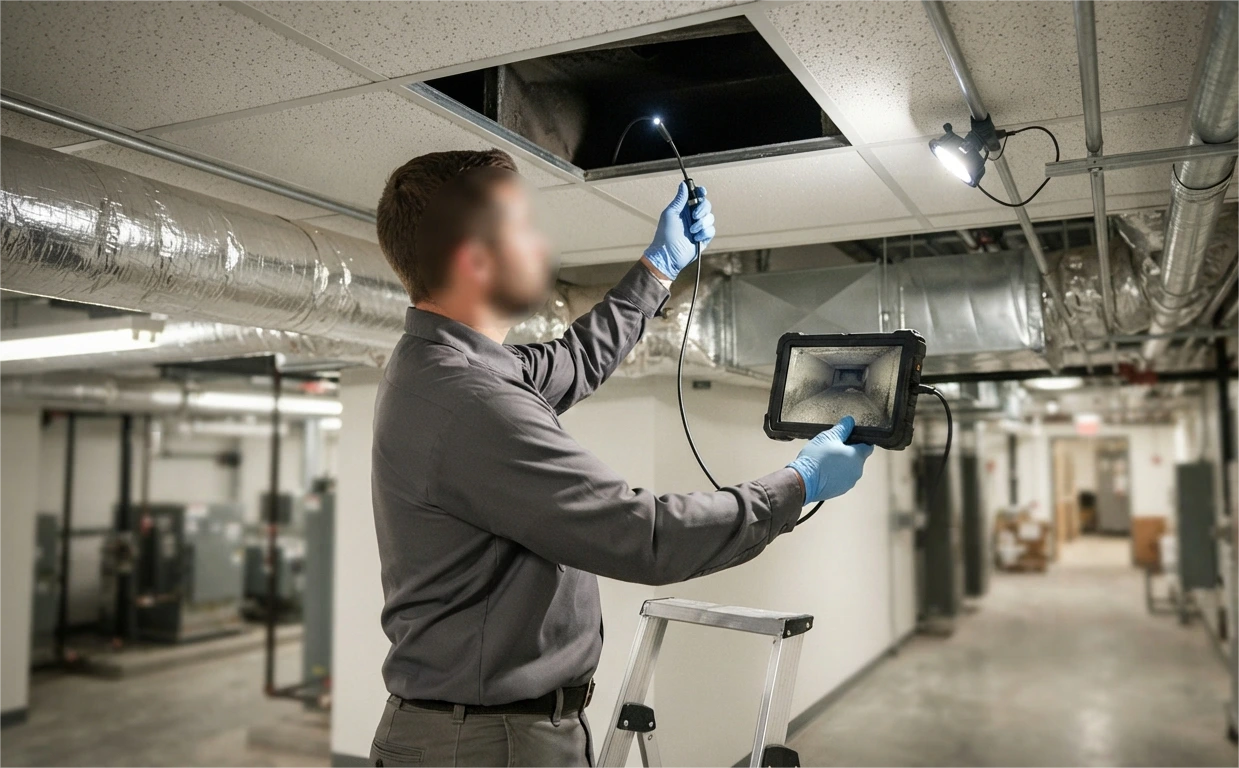
A big part of getting air duct cleaning in Massachusetts right is seeing what’s going on inside the vent and that takes specialized inspection equipment.
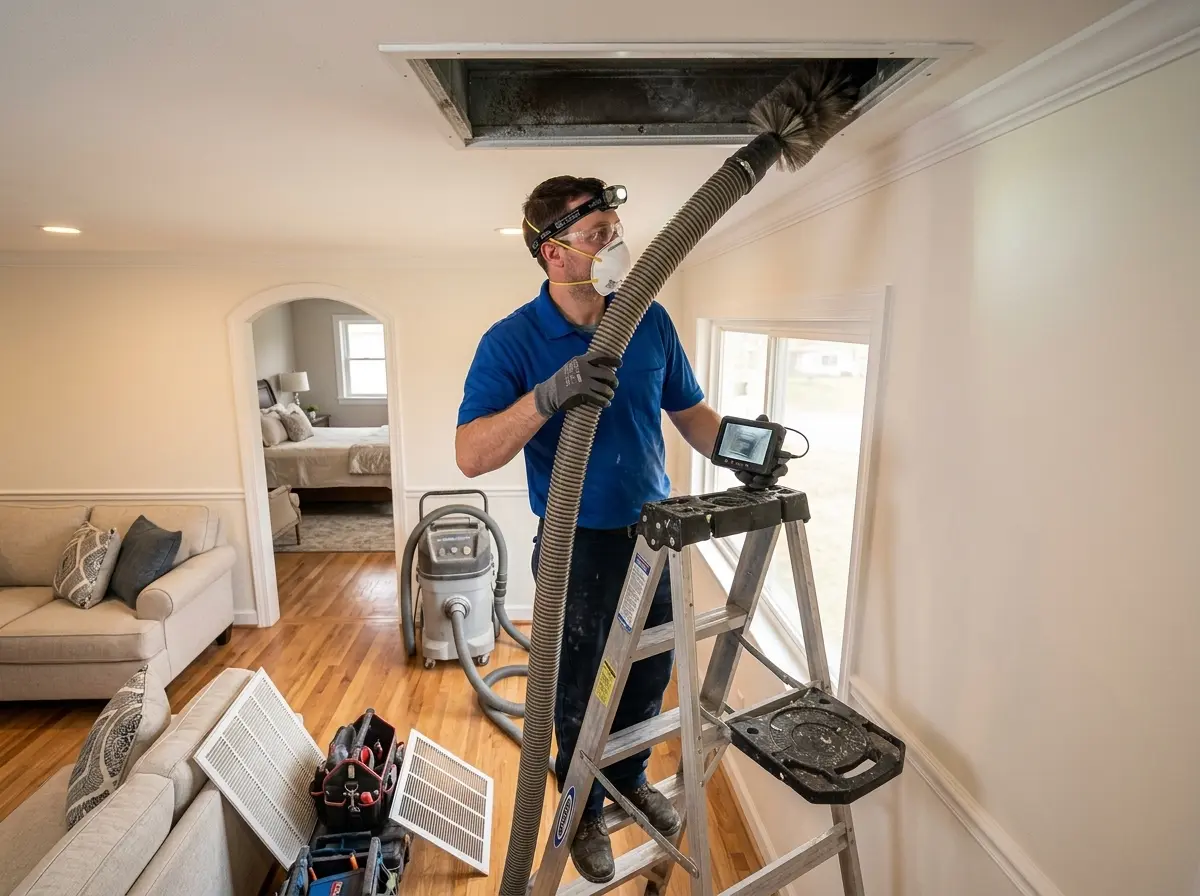
Professionals use duct inspection cameras designed to navigate tight ductwork. These cameras are mounted on flexible cables or, in some cases, small robotic systems that can travel through the vent on their own. High-intensity LED lighting is built in, so even the darkest interior sections are clearly visible in real time.
These cameras serve a few important purposes throughout the process. Before cleaning begins, an inspection helps identify heavy lint buildup, crushed ducts, or other obstructions. It also lets the technician choose the safest and most effective cleaning method and documents why the service is needed in the first place.
During cleaning, cameras allow technicians to monitor progress as it happens, making sure nothing gets missed and that the entire vent run is properly cleared. Afterward, a final inspection confirms that airflow has been restored and the vent is actually clean.
7. Safety and Protection Equipment
Professional air duct cleaning in Massachusetts shouldn’t feel chaotic or messy. Which is why, it’s important that both the technicians and your home are protected while the work is going on.
And don’t forget PPE. Technicians should always be wearing proper protective gear, things like gloves, safety goggles, and respirators or dust masks. The inside of ductwork can hold dust, allergens, mold spores, and fiberglass particles, and no one should be breathing that in or carrying it through your house.
Your home gets the same level of consideration. Floors are covered, furniture is protected with plastic sheeting, and work areas are kept contained so debris stays where it belongs. The goal is to pull contaminants out of your duct system, not spread them around your living space.
When safety and protection are handled correctly, the whole process feels clean, controlled, and respectful, exactly how it should be.
Do the Right Tools Make a Difference?
Absolutely.
Knowing what equipment should be used makes it much easier to tell the difference between a professional service and a shortcut. When you schedule commercial air duct cleaning, there are a few clear signs you’re dealing with a company that’s equipped to do the job properly.
A reputable service will use professional-grade portable vacuum systems with HEPA filters to get the job done. They’ll bring multiple tools, such as rotary brushes, air whips, or compressed air systems, and choose the right ones based on your duct layout.
Visual inspection equipment should be part of the process, along with before-and-after documentation so you can see what was actually done. Proper access tools should be used, and any openings created during cleaning should be professionally sealed once the job is finished. Most importantly, the cleaning should cover the entire system.
If a company shows up with a shop vacuum and a brush on a stick, they simply don’t have the equipment needed to clean a duct system effectively. The same goes for services that only clean the main trunk line while ignoring the rest of the system, that’s an incomplete job, no matter how it’s packaged or priced.
Professional equipment is an investment, and it reflects a company’s standards. The right tools make deeper, more consistent cleaning possible, keep dust and debris properly contained, and protect your home throughout the process. In other words, good tools are the baseline for doing the job right.
Professional Air Duct Cleaning in Massachusetts Starts Here!
At the end of the day, clean air doesn’t happen by accident, and it definitely doesn’t happen with half the tools missing.
If you’re in Massachusetts and ready to see what real professional air duct cleaning looks like, Delta Clean Air, top rated air duct cleaning company in Boston, delivers the kind of thorough service your home deserves.
We use industry-standard tools and NADCA-approved methods that make sure no section of your HVAC system gets skipped.
Stop settling for good enough. Schedule a consultation, take a look at the before-and-after difference, and enjoy cleaner air knowing the job was done right.