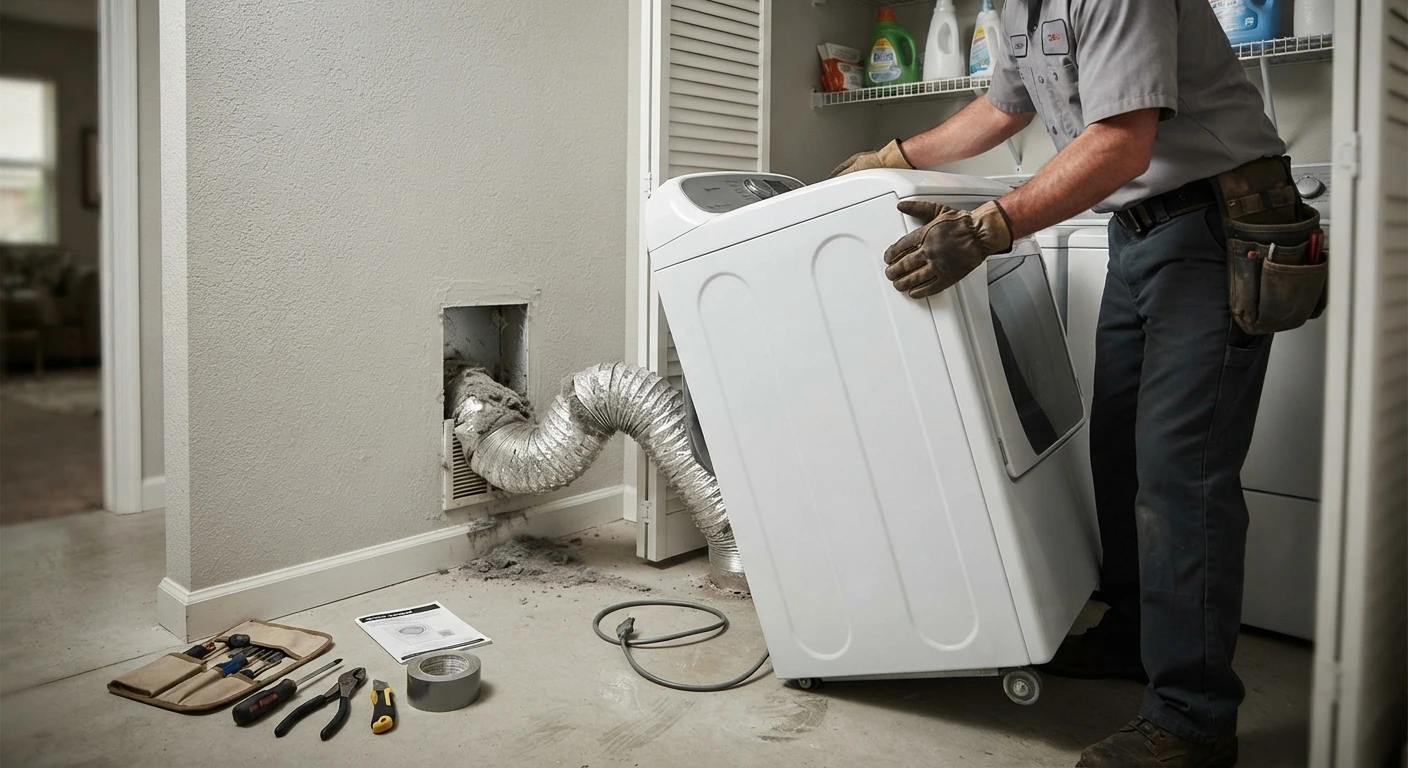
A dryer may seem like a simple appliance, but it depends on steady airflow to remove heat and moisture from every load. When lint, debris, a crushed duct, or an outside obstruction restricts that airflow, the dryer has to work harder to do the same job.
Over time, that extra strain can affect heating components, motors, sensors, wiring, and other parts inside the appliance. Regular dryer vent cleaning helps keep the exhaust path open so hot, moist air can leave the dryer instead of building up inside the system.
A blocked vent is therefore more than a drying-time problem. It can contribute to dryer damage, higher energy use, and a higher fire risk.
How a Blocked Dryer Vent Puts Extra Strain on Your Dryer
A clothes dryer works by moving heated air through wet clothing and then pushing that warm, moisture-filled air outside through the vent.
The process depends on airflow.
When the dryer vent becomes restricted, air cannot leave at the expected rate. Moisture remains in the drum longer, heat stays inside the system, and the dryer may need more time to complete each load.
That changes how the appliance operates.
Instead of running one normal drying cycle, it may run much longer or require a second cycle. Heating components stay active for more time. The blower motor continues moving air against greater resistance. Internal temperatures may rise.
One blocked vent may therefore place stress on several parts of the appliance at the same time.
The U.S. Fire Administration also advises homeowners to check dryer venting systems for damage, crushing, or restrictions and to make sure the outside vent cover opens when the dryer operates.
Restricted Airflow Can Make the Dryer Overheat
Heat is necessary for drying clothes, but that heat needs a way to leave.
A vent blockage interferes with that process.
Lint buildup inside the duct reduces the space available for airflow. A crushed transition duct behind the dryer can create the same problem. Bird nests, debris, or a blocked exterior vent can also restrict exhaust.
As airflow falls, more heat can remain inside the dryer and vent line.
Some dryers have safety controls that shut the appliance down when temperatures become too high. That protection can reduce immediate risk, but repeated overheating is still not normal operation.
Excess heat can affect:
- Thermal fuses
- Heating elements
- Thermostats
- Temperature sensors
- Electrical connections
- Wiring
- Internal seals
- Motors and other moving components
If these parts are repeatedly exposed to operating conditions outside the normal range, they may fail sooner.
A dryer that frequently shuts off before the load is finished should not simply be restarted again and again. The vent path should be checked for restriction along with the appliance itself.
Longer Drying Cycles Increase Wear on Internal Components
One of the simplest ways a blocked vent can shorten dryer life is by increasing operating time.
Suppose one load should take 45 minutes to dry.
If poor airflow causes the same load to take 75 minutes, the dryer is operating for another 30 minutes every time it is used.
Across multiple loads each week, those extra minutes add up.
The drum keeps turning. The motor keeps running. The belt keeps moving. Bearings and rollers continue to rotate. Heating components remain active for longer periods.
Even if the dryer never reaches a temperature high enough to trigger a shutdown, additional run time still adds mechanical and electrical wear.
A dryer used by a large household may experience this problem faster because it operates more often.
Commercial dryers in apartment buildings, laundromats, hotels, gyms, restaurants, and other facilities can face even greater strain because multiple loads may run throughout the day.
That is why airflow matters for both dryer performance and appliance life.
A Blocked Vent Can Stress the Heating Element
Electric dryers commonly use a heating element to warm the air moving through the drum.
That element is supposed to operate within a system where air continues moving through the appliance.
When exhaust airflow becomes restricted, the temperature around heating components may rise. The dryer can cycle the heating element more often or operate for longer because moisture is leaving the clothes slowly.
Repeated heat stress may eventually contribute to component failure.
A failed heating element creates another repair problem. The drum may continue turning while clothes remain damp because the dryer no longer produces enough heat.
Homeowners may assume the dryer itself has reached the end of its life when the original problem began with poor ventilation.
Before replacing parts, it is important to determine whether the dryer can exhaust properly.
Replacing a failed heating component without correcting a blocked vent can leave the same operating problem in place.
The Dryer Motor May Work Harder When Airflow Is Restricted
The blower system helps move air through the dryer and into the exhaust duct.
A restricted vent makes that airflow harder to maintain.
Lint buildup, duct damage, long vent runs, sharp bends, or an obstructed outside hood can all increase resistance.
The blower motor must continue operating while the dryer works through the cycle.
At the same time, longer drying cycles keep the motor running for additional minutes or hours each week.
That combination can add unnecessary stress.
Motor failure does not always happen immediately after a vent becomes blocked. The damage may develop through repeated use.
This is why homeowners should pay attention to changes in normal dryer performance instead of waiting for the appliance to stop working altogether.
Damp Clothes After One Cycle Can Point to Poor Dryer Vent Airflow
Clothes that remain damp after a complete cycle are one of the most common complaints connected with poor airflow.
The dryer may still heat normally.
The problem is that the moisture removed from the clothes cannot escape from the appliance fast enough.
Instead, humid air remains in the drum and vent line.
Running another cycle may eventually dry the clothing, but it does not correct the restriction.
This pattern wastes time and adds more operating hours to the dryer.
You may first notice the problem with:
- Towels
- Bedding
- Jeans
- Large clothing loads
- Heavy fabrics
These materials hold more moisture, so poor ventilation becomes more noticeable.
If drying time has increased without a major change in load size or dryer settings, the exhaust system deserves attention.
Clothes That Feel Too Hot Can Indicate Trapped Heat
Clothing should come out warm at the end of many dryer cycles.
It should not feel excessively hot.
Very hot clothing, a hot dryer cabinet, or unusual heat in the laundry area can indicate that warm exhaust air is not leaving the appliance as it should.
The U.S. Fire Administration warns that lint buildup can reduce airflow and that a compromised exhaust vent may lead to overheating.
Heat can become trapped for several reasons.
The vent may contain packed lint. The transition hose behind the dryer may be crushed against the wall. The exterior flap may be stuck. An animal nest may obstruct the opening. The duct may also contain bends or damage that reduce airflow.
Finding the cause matters because cleaning cannot fix every ventilation problem.
If the duct is damaged or crushed, dryer vent repair may be needed in addition to removing lint.
A Clogged Dryer Vent Can Increase Energy Use
A blocked vent can damage more than appliance components. It can also increase the amount of energy needed to dry the same amount of clothing.
The reason is straightforward.
If one cycle no longer removes enough moisture, the dryer has to run longer.
Some households respond by adding another 20 or 30 minutes. Others simply restart the machine for another cycle.
Either approach uses additional electricity or gas.
The dryer is also operating its motor, blower, control system, and heating system for a longer period.
One slow load may not create a large difference, but repeated cycles throughout the year can add unnecessary energy use.
For commercial properties, the effect can be larger because several machines may run throughout the day.
Keeping the exhaust line clear allows the dryer to work closer to its intended cycle length instead of using additional energy to compensate for poor airflow.
Lint Buildup Can Become a Dryer Fire Hazard
The most serious problem created by a blocked dryer vent is not appliance wear. It is a fire risk.
Lint is combustible.
Some lint is captured by the lint screen, but not all of it remains there. Fine fibers can move past the screen and collect inside the dryer or exhaust duct.
As buildup increases, airflow falls, and heat can rise.
According to the U.S. Fire Administration, failure to clean was the leading factor contributing to 31% of home clothes dryer fires from 2018 through 2020.
NFPA research covering 2014 through 2018 found that local fire departments responded to an estimated average of 13,820 home structure fires per year involving dryers. Failure to clean contributed to 32% of dryer fires, while dust, fiber, or lint was the first material ignited in 27%.
Those numbers show why vent maintenance should not be treated only as an appliance-efficiency issue.
A blocked exhaust path combines three things that should not remain together: lint, reduced airflow, and heat.
Cleaning the Lint Screen Does Not Clean the Dryer Vent
Cleaning the lint screen after every load is important, but it does not replace dryer vent cleaning. Our earlier comparison of DIY versus professional cleaning covers this distinction in more depth.
The lint screen catches a large portion of fibers leaving the drum, but some lint can pass through and enter the exhaust system.
That buildup happens beyond the area homeowners can see.
A vent may travel several feet behind walls, through ceilings, into a basement, or up to a roof exit.
Lint can collect along bends, connections, rough surfaces, and restricted sections.
The outside vent opening can also develop its own problems.
The U.S. Fire Administration recommends cleaning the lint filter every time the dryer is used and cleaning dryer vent ductwork every year.
These are two different maintenance tasks.
The lint screen protects the dryer during daily use.
The vent duct still needs separate attention because it carries the exhaust from the appliance to the exterior.
Dryer Vent Length and Bends Can Affect How Fast Lint Builds Up
Not every dryer vent has the same layout.
Some dryers sit directly against an outside wall with a short exhaust path.
Others connect to vents that travel through several rooms, walls, ceilings, or floors before reaching the outside.
A longer vent can give lint more places to collect.
Turns can also affect airflow because each bend changes the direction of the exhaust.
This matters in many houses, apartments, and commercial buildings where the laundry area is not located against an exterior wall.
Poor duct design can make a buildup problem worse.
A vent with several bends may begin losing airflow before a short, straight vent serving a dryer with similar usage.
That is why vent condition should be evaluated based on the entire exhaust path rather than only the few inches of duct visible behind the appliance.
A Crushed Dryer Hose Can Create the Same Problems as Lint Buildup
Lint is not the only cause of a blocked dryer vent.
The flexible transition duct behind the machine can become crushed when the dryer is pushed too close to the wall.
Once flattened, it cannot carry the expected volume of exhaust.
The result can look very similar to a lint clog.
Drying cycles become longer. Heat increases. Clothes may remain damp. The laundry area may become warmer.
Pulling the dryer forward can reveal the problem, but the duct should also be checked for tearing, loose connections, or damage.
The U.S. Fire Administration specifically recommends checking the venting system behind the dryer to confirm that it is not damaged, crushed, or restricted.
A cleaning service may remove lint, but damaged ductwork needs to be corrected for airflow to return.
The Outside Dryer Vent Opening Can Block the Entire System
The last part of the exhaust system is the vent opening outside the building.
If that opening cannot release air, the rest of the system cannot function correctly.
Lint can accumulate around the hood.
The flap may become stuck.
Birds and small animals may build nests in or near the opening.
Leaves and outdoor debris may also interfere with exhaust.
When the dryer is running, the exterior flap should open as air exits.
Weak movement can indicate reduced airflow somewhere in the system.
No movement may indicate a larger blockage.
Outdoor obstructions can be easy to miss because homeowners usually spend their laundry time inside.
Checking the exit point provides another clue about whether the dryer is exhausting correctly.
Commercial Dryers Can Develop Vent Problems Faster
A residential dryer may run a few loads each week.
A commercial dryer may operate for hours each day.
That difference matters because every load can send additional lint into the exhaust system.
Apartment laundry rooms, hotels, laundromats, senior living facilities, gyms, salons, restaurants, pet care businesses, and other properties with frequent laundry use may need more attention than a typical household.
The main operating problems are the same:
- Drying cycles become longer.
- Machines remain hot.
- Energy consumption increases.
- Components operate for more hours.
- Lint continues accumulating.
- Fire risk increases if ventilation remains restricted.
Commercial property managers should base maintenance schedules on dryer use, vent length, duct layout, and previous buildup instead of assuming every property needs the same interval.
Dryer Vent Cleaning Can Help Protect the Appliance You Already Own
A blocked dryer vent does not always cause an immediate breakdown. Damage can develop through repeated overheating and longer operating cycles until a component eventually fails.
That makes prevention much easier than waiting for the dryer to stop working.
Keeping the vent open helps the dryer release moisture and heat with less resistance.
It can also help reduce unnecessary cycle time and the strain placed on components that otherwise have to operate longer.
If a dryer has begun taking longer, running unusually hot, shutting down during cycles, or leaving clothes damp, the exhaust path should be checked before assuming the appliance itself needs replacement.
Clear the Blockage Before Extra Heat Turns Into a Bigger Repair
A dryer that needs two cycles for one load or leaves the laundry room unusually hot is costing you more than a few extra minutes. Restricted airflow can keep heat inside the appliance, add wear to motors and heating components, increase energy use, and allow combustible lint to keep accumulating.
Delta Clean Air provides residential and commercial dryer vent cleaning in Boston and other Massachusetts service areas, along with dryer vent repair and nest removal when an obstruction is caused by damaged ductwork or an outside blockage. If your dryer has started taking longer to finish loads or is running hotter than it used to, contact Delta Clean Air to have the vent system checked and cleared before the added strain turns into a dryer repair or safety problem.