Air duct cleaning has a confusing reputation. Some homeowners and property managers are told their HVAC ducts should be cleaned every few years. Others hear that duct cleaning does nothing and is always a waste of money.
The EPA’s position is more balanced. It does not recommend routine duct cleaning for every property. It recommends considering cleaning when there is a specific reason, such as substantial visible mold growth, vermin infestation, or ducts that are heavily clogged with dust and debris and releasing particles into occupied spaces.
So, air duct cleaning itself is not automatically a scam. The problem starts when the service is sold without evidence that the HVAC system needs it or when claims go beyond what research supports.
Is Air Duct Cleaning a Scam According to the EPA?
No. The EPA does not say air duct cleaning is a scam.
It says knowledge about duct cleaning is still limited and does not support a blanket recommendation for routine cleaning. The agency states that cleaning has not been shown to prevent health problems and that studies have not conclusively shown that dirty ducts increase particle levels inside homes. Much of the material inside ducts can remain attached to duct surfaces instead of entering occupied rooms.
At the same time, the EPA identifies conditions where cleaning can make sense.
That distinction is important.
A legitimate duct-cleaning decision starts with the condition of the HVAC system. A questionable sales approach starts with the assumption that every duct system needs cleaning simply because several years have passed.
What Does the EPA Actually Recommend for Air Duct Cleaning?
The EPA’s air duct cleaning guidance gives three main situations where cleaning should be considered.
Substantial Visible Mold Growth
Cleaning may be appropriate when there is substantial visible mold growth inside hard-surface ducts or on other components of the heating and cooling system.
This comes with an important condition.
The moisture source also needs to be corrected. Cleaning mold without addressing the water or moisture problem can allow growth to return.
If insulated or fiberglass duct material becomes wet and moldy, the EPA says it cannot be effectively cleaned and should be removed and replaced.
Vermin or Pest Infestation
The EPA also recommends considering HVAC duct cleaning when ducts have been infested with rodents, insects, or other vermin.
Cleaning should not happen in isolation.
The source of the infestation needs to be corrected so pests do not return after the HVAC system has been cleaned.
Excessive Dust and Debris
Cleaning may also make sense when ducts are substantially clogged with excessive amounts of dust and debris and particles are being released from supply registers into occupied spaces.
The word substantially matters.
A light coating of dust inside ductwork is not the same as heavy accumulation restricting or contaminating the system.
Dust Around a Vent Does Not Automatically Mean Your Ducts Need Cleaning
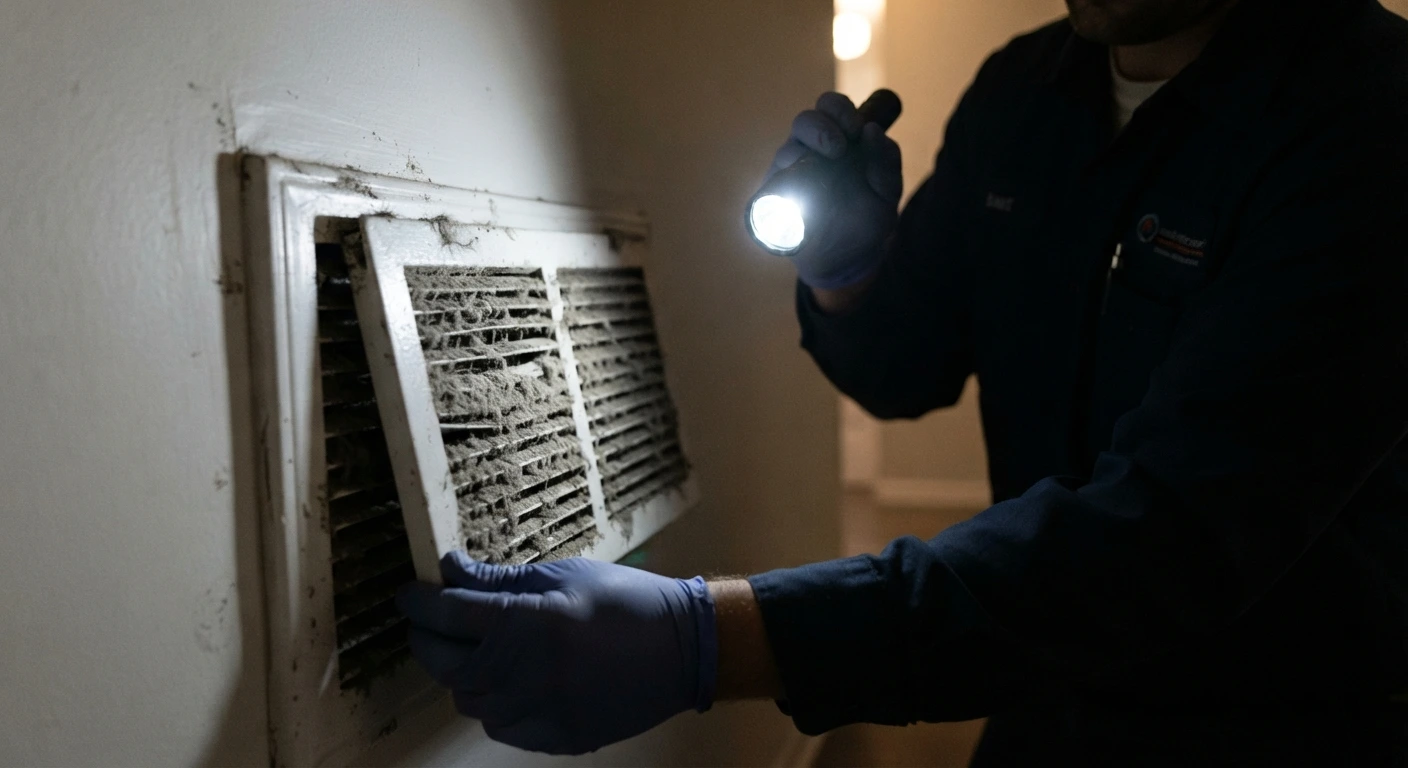
One of the easiest mistakes is seeing dust on a return grille and assuming the duct system behind it must be heavily contaminated.
The EPA specifically notes that dusty return registers are common because dust-containing air is being pulled through the grille. The visible dust can often be removed by vacuuming or cleaning the register itself.
That does not prove that the entire HVAC system needs professional cleaning.
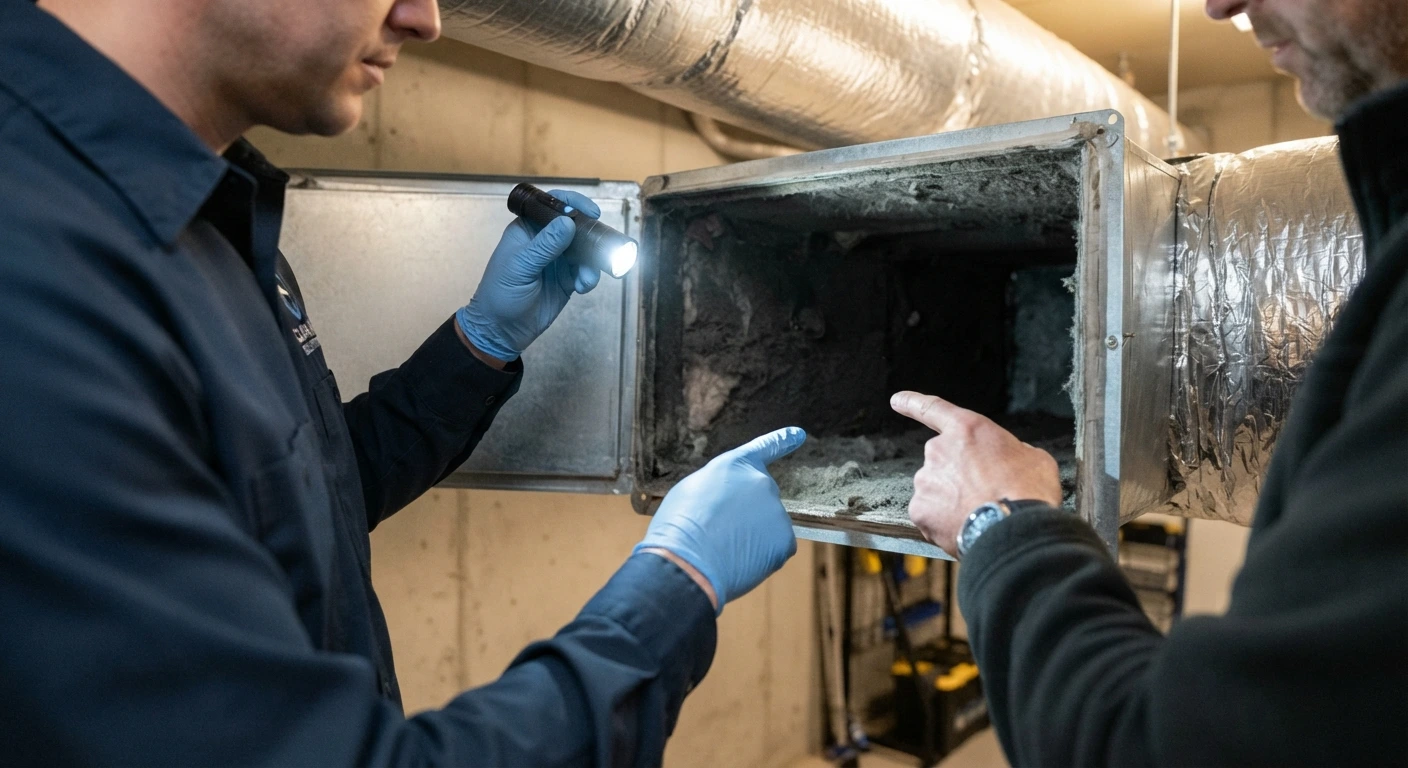
Before paying for air duct cleaning, ask to see evidence of contamination deeper inside the system.
A visual inspection can help separate a dirty register from ducts containing significant deposits.
This is one reason residential air duct cleaning should follow an actual inspection rather than a calendar alone.
Does Air Duct Cleaning Improve Indoor Air Quality?
This is where marketing claims can go too far.
The EPA states that duct cleaning has never been shown to prevent health problems. Research also has not conclusively demonstrated that cleaning ducts by itself produces meaningful reductions in indoor particle levels in every home.
That does not mean removing substantial contamination from an HVAC system has no value.
If a system is releasing debris into occupied spaces, removing that source addresses a specific condition.
The unsupported claim is that every property will experience major health improvements simply because the ductwork was cleaned.
For commercial buildings, indoor air quality should also be considered a larger system. Filtration, ventilation, moisture control, building cleanliness, HVAC maintenance, outdoor air, occupancy, and pollutant sources can all affect indoor conditions.
Cleaning ducts cannot correct every indoor air problem.
Does Air Duct Cleaning Lower Energy Bills?
Another common sales claim is that duct cleaning will automatically reduce utility costs.
The evidence does not support promising a fixed saving from cleaning ductwork alone.
The EPA has noted some evidence that cleaning heating and cooling components such as coils, fans, and heat exchangers may improve system efficiency in certain circumstances, but there is little evidence that cleaning only the ducts produces the same result.
That distinction matters for commercial HVAC systems.
A system with dirty coils, restricted filters, damaged ductwork, or mechanical problems may need maintenance beyond duct cleaning.
If energy costs are the main complaint, the HVAC system should be evaluated as a whole rather than assuming dust inside the ducts is responsible.
Air Duct Cleaning Cannot Fix the Cause of Mold
Finding mold changes the issue from simple dust removal to moisture control.
Mold needs moisture.
If condensation, a leak, a drainage problem, humid air, or another water source created the growth, the source must be found and corrected.
The EPA states that if the conditions that caused mold are not corrected, the mold can return after cleaning.
This is why a contractor claiming that cleaning and spraying the ducts will permanently solve every mold problem should raise questions.
A proper response asks why moisture reached the HVAC system in the first place.
Be Careful with Automatic Claims That Something Is Mold
A dark patch inside a vent is not proof of mold based on a photograph alone.
The EPA notes that a substance may look like mold while another material can have a similar appearance. If confirmation matters, laboratory analysis may be used to determine whether the material is biological growth.
Property owners should be careful when someone uses an unclear image to create immediate pressure for an expensive upgrade.
Ask:
- What exactly was found?
- Where was it found?
- Can you see it yourself?
- Is the material on hard-surface ductwork or another HVAC component?
- What moisture condition caused it?
- Does it require confirmation before additional work?
These questions can separate evidence from sales pressure.
Should Air Ducts Be Cleaned Every Three to Five Years?
The EPA does not prescribe a routine three-year, five-year, or annual cleaning schedule for every home.
Its current position is to clean as needed.
That means two properties of the same age can have very different cleaning needs.
One building may have good filtration, sealed ductwork, limited dust, and no moisture or pest history.
Another may have recently completed major construction, suffered a rodent infestation, operated without effective filtration, or contained visible debris.
The second building has a stronger reason for inspection and possible cleaning even if both HVAC systems are the same age.
Condition should control the decision.
Renovation Dust Can Create a Legitimate Reason to Inspect Ducts
Construction produces large amounts of fine material.
Drywall sanding, cutting, demolition, flooring work, and other renovation activities can introduce dust into a building.
The EPA does not make a blanket recommendation that every renovation must be followed by duct cleaning, but it does advise controlling dust during remodeling and keeping contaminants from entering the HVAC system.
If registers were left open during dusty construction or visible debris entered the system, an inspection can determine whether cleaning is warranted.
This is different from automatically cleaning the ducts after every small renovation.
What Does Proper HVAC Duct Cleaning Involve?
When cleaning is needed, the entire affected HVAC system should be considered.
Cleaning only the visible register covers or inserting a vacuum hose a short distance into each vent is not the same as cleaning contaminated ductwork.
The National Air Duct Cleaners Association describes source removal as a core HVAC cleaning method. Contaminants are loosened from interior surfaces while negative pressure and vacuum equipment collect and remove the material. Our own guide breaks this process down step by step.
Its HVAC cleaning guidance also addresses cleaning affected components rather than leaving contamination in parts of the system that can contaminate cleaned areas again.
The exact scope should depend on what the inspection finds.
Can Air Duct Cleaning Make Things Worse?
Poorly performed cleaning can create problems.
The EPA warns that an inadequate vacuum collection system can release more dust, dirt, and other contaminants into the home than if the ducts had been left alone. Careless cleaning can also damage ducts or HVAC components.
This is another reason to ask how contamination will be contained.
The goal is to remove material from the HVAC system, not loosen it and allow it to enter occupied rooms.
Before service begins, understand which components are included and what equipment will be used.
Should Chemicals or Sanitizers Be Sprayed Inside Air Ducts?
Chemical treatments deserve extra scrutiny.
The EPA notes that some service providers propose chemical biocides or sealants for use inside ductwork, but research on their effectiveness and possible effects remains limited. It also states that a pesticide product must be registered for its intended use before it can legally be applied for that purpose.
A sanitizer should therefore not be treated as an automatic add-on to every air duct cleaning job.
Ask why the chemical is being proposed, what product will be used, where it will be applied, and whether that use is permitted under the product label.
Mechanical removal of dust is a different service from applying chemical treatment.
What Are the Red Flags of an Air Duct Cleaning Scam?
The service becomes questionable when fear and vague claims replace inspection.
Be cautious when:
- You are told every HVAC system needs cleaning on a fixed schedule.
- A very low advertised price turns into major add-ons after arrival.
- A contractor claims duct cleaning will cure allergies or prevent illness.
- You are promised a specific reduction in energy bills without evaluating the HVAC system.
- “Mold” is diagnosed from an unclear photograph with no explanation.
- You are pressured to approve chemical treatments without being told what product is being used.
- No evidence of contamination is shown.
- Only registers are cleaned while the rest of the system is ignored.
- The cause of moisture or pest activity is never addressed.
None of these points means that every recommendation for additional work is dishonest.
It means the recommendation should be supported by an identifiable condition.
How Can You Tell if Air Duct Cleaning Is Actually Worth It?
Start with evidence.
If you can see substantial contamination, pests have entered the system, debris is coming from registers, or another documented condition matches EPA guidance, air duct cleaning can be a reasonable response.
If the ducts have only a light layer of settled dust and there is no evidence of mold, vermin, or major debris, cleaning may offer little benefit.
For a property manager or homeowner who is unsure, an inspection is more useful than guessing.
After the service, the ductwork should show clear evidence that debris has been removed rather than simply disturbed. Knowing how to tell if your air ducts were cleaned properly can help you evaluate the work before considering the job complete.
Air Duct Cleaning Is Not a Scam When There Is a Reason to Do It
The EPA does not recommend routine duct cleaning for every building, and it does not support broad claims that cleaning prevents health problems. At the same time, it clearly identifies circumstances where cleaning should be considered, including substantial mold growth on suitable HVAC surfaces, vermin infestation, and heavy dust or debris being released from the system.
Delta Clean Air provides residential and commercial cleaning in Boston and across Massachusetts, using inspection and source-removal equipment for HVAC duct systems. If you can see heavy debris, have had pest activity or construction dust enter the ductwork, or want the system checked before deciding whether cleaning is justified, contact us to have the duct condition assessed before paying for work you may not need.