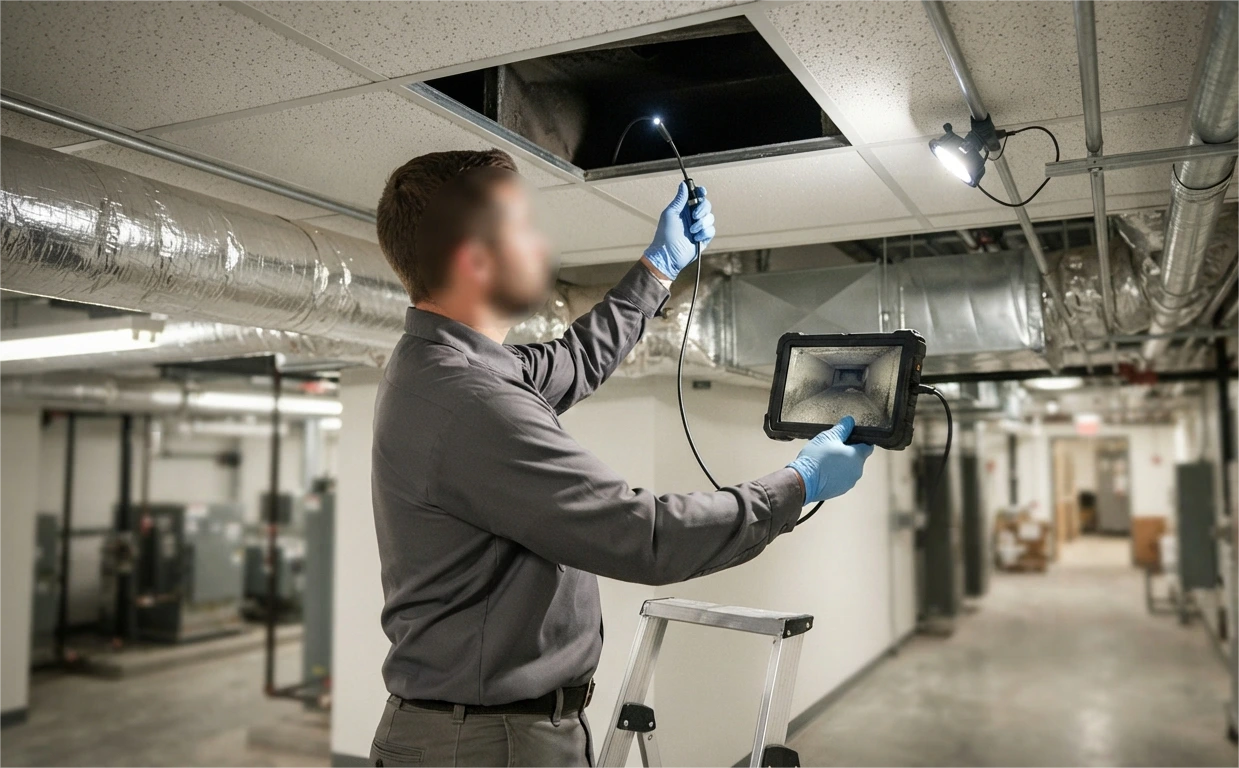
Most building owners think a clean filter blocks all the dust, but the truth is more layered than that. Dust still finds many ways inside the ductwork, even with a brand-new filter in place. Two big reasons stand behind this problem: filtration gaps and the Venturi effect. This blog breaks down how each one works, why both matter for office HVAC and home HVAC, and what owners should plan to do for proper HVAC duct cleaning before the dust load hits performance and air quality.
What Your HVAC System Pulls Into the Ductwork Every Week
When we talk about dust inside ductwork, we are talking about a mixed load that builds up from many sources, including:
- Fine particles from outside air are pulled in through fresh air intakes on the roof
- Skin flakes, hair, and lint from people moving in the space each day
- Fibers from carpet, upholstery, and office paper across busy floors
- Mold spores and bacteria are carried by humid air during the summer months
- Insulation fibers from inside wall cavities and ceiling plenums
- Drywall and grout dust left behind by past renovation work
- Cooking grease aerosols from kitchens and pantries in mixed-use buildings
- Pollen and brake dust are pulled in from streets in dense parts of Boston
A typical office HVAC system pushes 1,000 to 5,000 cubic feet of air per minute. Over a single work week, that adds up to more than 1.4 million cubic feet of air moving past every joint and seal in the duct run. Every cubic foot brings some load of particles with it.
The EPA reports indoor air can hold two to five times more particle load than outdoor air in many US buildings. You can read more on this at the EPA indoor air quality page.
Common Filter Problems That Increase Duct Dust
A filter works only when air is forced to pass through the filter media. If even a small gap exists around the filter, air takes the easy path. Engineers call this filter bypass, and it shows up across both new and old commercial buildings across the city.
Wrong Filter Size
A filter rated 20x25x1 inches placed in a 22x25x2 slot leaves open gaps on the sides. Air rushes through those open gaps because they offer no resistance. The filter stays clean on the face, but the duct fills with dust week after week.
Worn or Crushed Filter Frames
Cardboard frames bend or buckle under suction. Once the frame loses shape, air sneaks around the edges. Many commercial buildings in Boston run the same brand of filter for years without checking frame quality, and the gap problem grows in silence.
Damaged Filter Cabinet Seals
The metal door or panel that holds the filter in place uses a foam or rubber strip for the seal. Over time, the strip rips, hardens, or falls off. Once that happens, air pours through the open seam rather than the filter media itself.
Low MERV Rating for the Space
A MERV 8 filter catches only larger dust and pollen. Fine particles smaller than 3 microns slip right through the media. Hospitals, labs, and clean office floors need MERV 13 or higher, but many older Boston commercial buildings still run MERV 6 to 8 because of cost or duct pressure limits.
Filters Left in Place Too Long
A filter that hits its loading limit forces air to find another path. Once the loaded filter creates too much pressure drop, air pulls in through every loose joint behind the filter housing. That is when duct dust spikes the fastest.
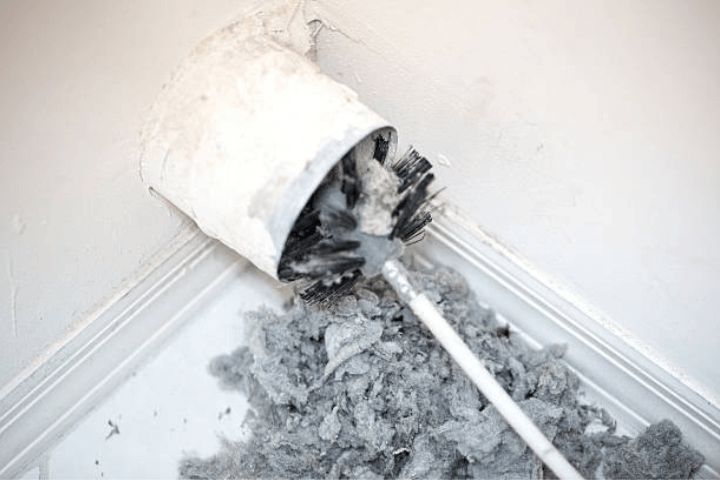
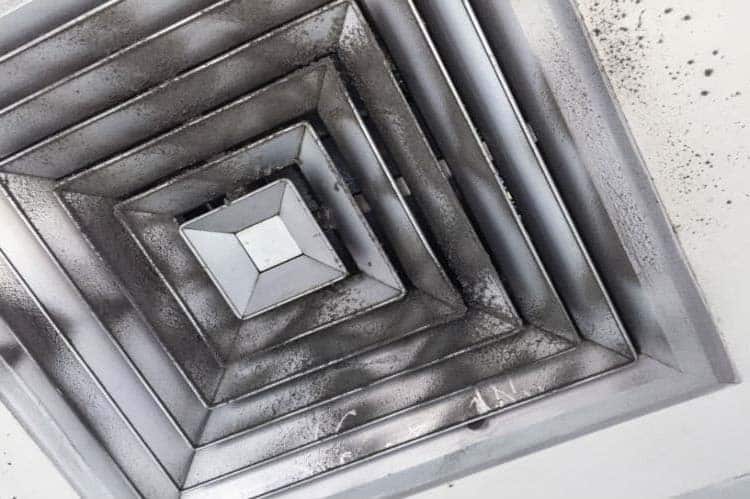
If you suspect filter bypass in your office or home, a planned residential or commercial air duct cleaning in Boston visit will show the trail of dust deposits and confirm where the gaps are letting particles through.
How the Venturi Effect Pulls Dust Into HVAC Ducts
The Venturi effect is a physics rule from the 1700s, named after Italian scientist Giovanni Battista Venturi. When air moves through a narrow section of a duct, its speed goes up and its pressure drops. The faster the air moves, the lower the pressure at that spot.
In your HVAC system, that low-pressure zone has one job: pull on every nearby surface, opening, and joint. If any seam, screw hole, or duct tape patch has a flaw, the low-pressure zone sucks outside air and dust right into the duct run.
How Small Duct Gaps Lead to Bigger Dust Problems
Common spots inside a commercial or home duct line where this pull is strongest include:
- Sharp duct elbows and reducers along the trunk run
- Damper plates and balancing valves that narrow the airflow
- Return air boots near the blower cabinet
- Branches take off from a main trunk line
- Filter housings during heavy load conditions
- Coil sections that create a tight passage between fins
At each one of these spots, even a one-square-inch gap in the duct seam can pull thousands of dust particles per minute into the system. Over months, those particles build up on coil fins, blower wheels, and inside the trunk lines. A thorough coil cleaning visit clears the buildup that has settled on the fin surfaces from this constant pull.
How Aging Duct Seals Increase Dust Buildup in Buildings
Boston has an older building stock with many pre-1980 ductwork installs. Older ducts use sheet metal joints sealed with cloth duct tape, not modern mastic sealant. The cloth tape dries, cracks, and falls off within ten to fifteen years of installation. After that, every Venturi zone in the system pulls dust in from the attic insulation above, often blown-in fiberglass or cellulose. Pull also comes from wall cavities behind plaster or drywall, from basement and crawlspace areas with moisture and mold load, and from drop ceilings stuffed with old fiberboard tiles. Industry data from NADCA points to many commercial HVAC systems in the Northeast carrying leak rates above 15 percent of total airflow, which leaves a wide path for unfiltered air to enter.
What This Means for Commercial Property Owners
For office, retail, medical, and hospitality owners across Boston and Cambridge, both filter bypass and Venturi pull bring high costs. The pain points often look like:
- Tenant complaints about dust on desks, monitors, and conference tables
- Higher cleaning bills for janitorial crews redoing surface dust each week
- Reduced cooling and heating output as coils get coated with dust film
- Higher energy bills from a blower working harder against duct buildup
- HEPA filter failure in lab or medical floors, leading to compliance issues
- Bad smells from mold and bacteria growing on dust-coated coil fins
- Lower indoor air quality readings during commercial building audits
Commercial owners often book HVAC duct cleaning every three to five years, but properties with high tenant turnover, food service tenants, or older duct runs should book sooner. Renovation work on any floor of a building also throws drywall dust and silica into the duct, which the Venturi effect spreads to every other floor through the trunk lines.
Read More: New Air Duct Cleaning Technology and Standards
What is The Impact on Residential Properties
Pre-war triple-deckers in Dorchester, Roxbury, South Boston, and Brighton have old duct runs through unconditioned basements and attics. Newer condos in the Seaport, Back Bay, and Cambridge run sealed metal duct, but the filter slots in many condo units are not airtight and let bypass happen at every blower cycle.
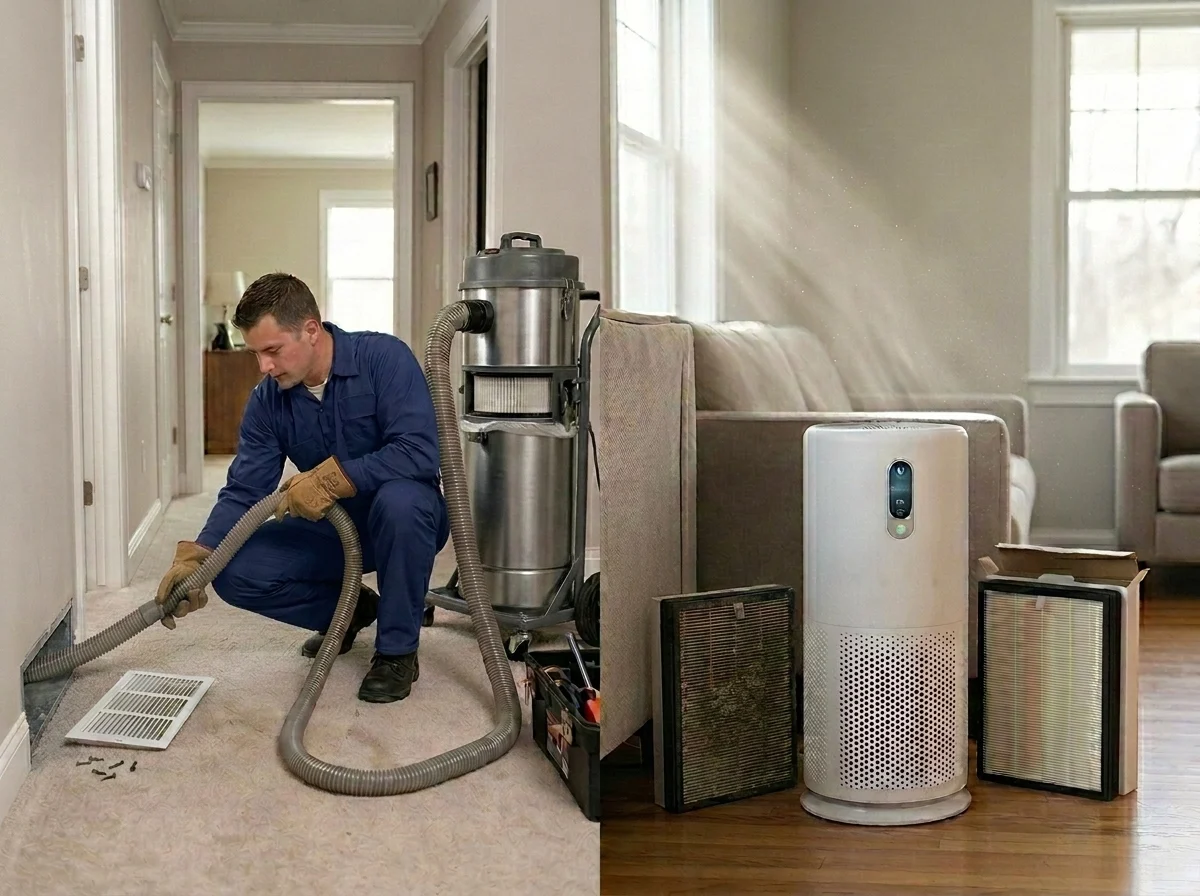
Common home pain points run from allergy and asthma flare-ups during heating season, to a layer of dust on shelves and electronics within days of cleaning. Pet dander and hair stick to vent grills, smells turn stale when the system kicks on after a long off period, and utility bills climb during cold New England winters. A regular air duct cleaning in Boston visit catches both filter bypass deposits and Venturi-pull deposits before they damage the coil, blower, or heat exchanger.
How a Proper Duct Cleaning Solves Both Problems
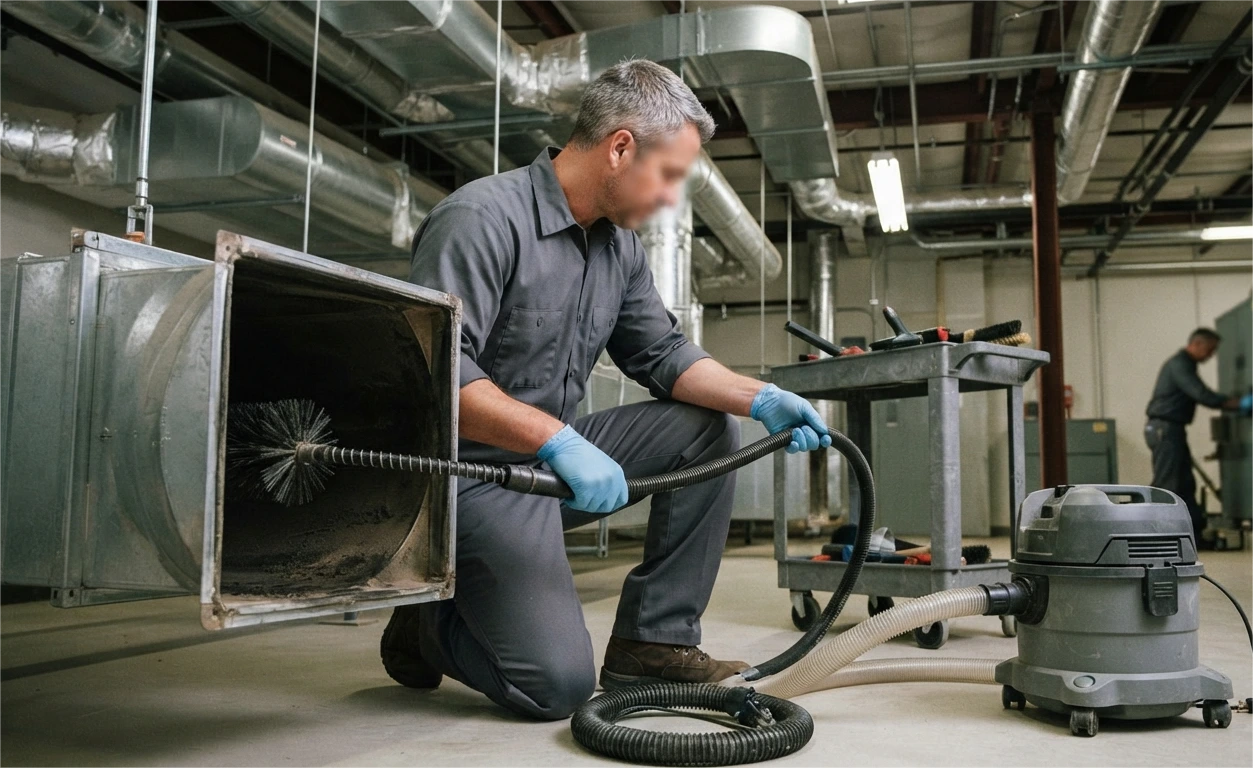
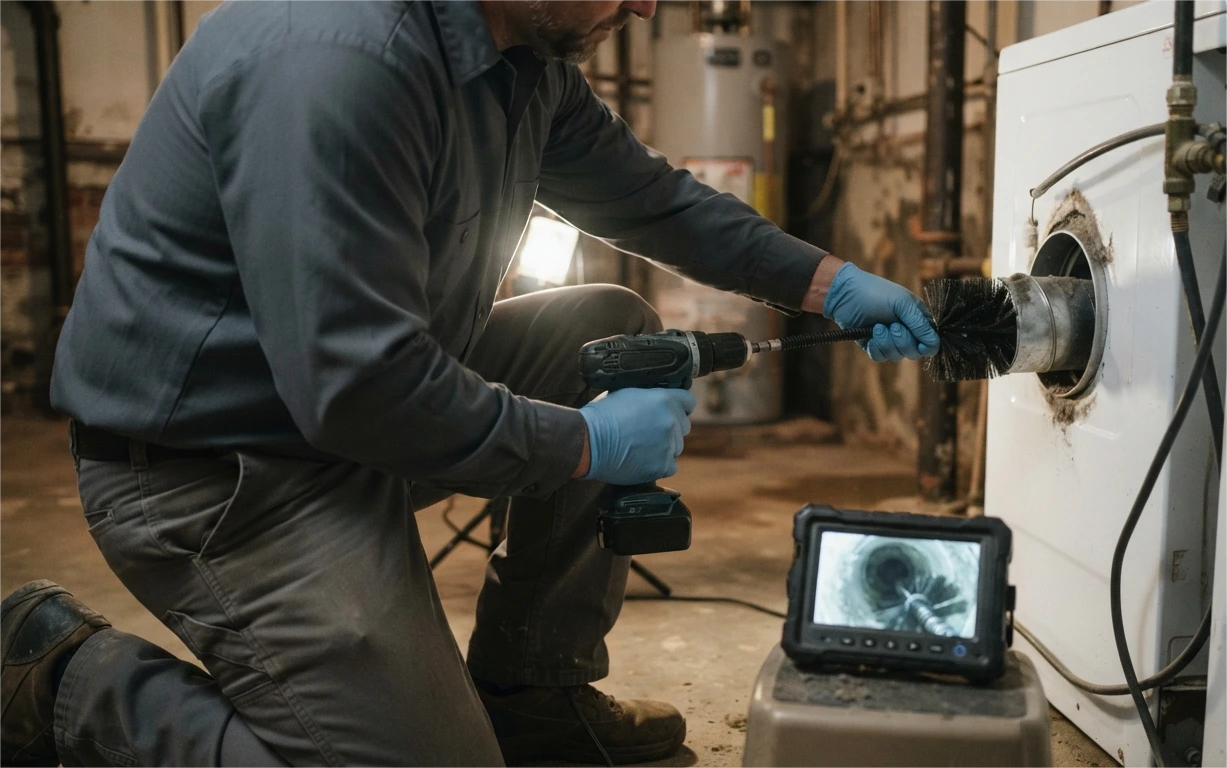
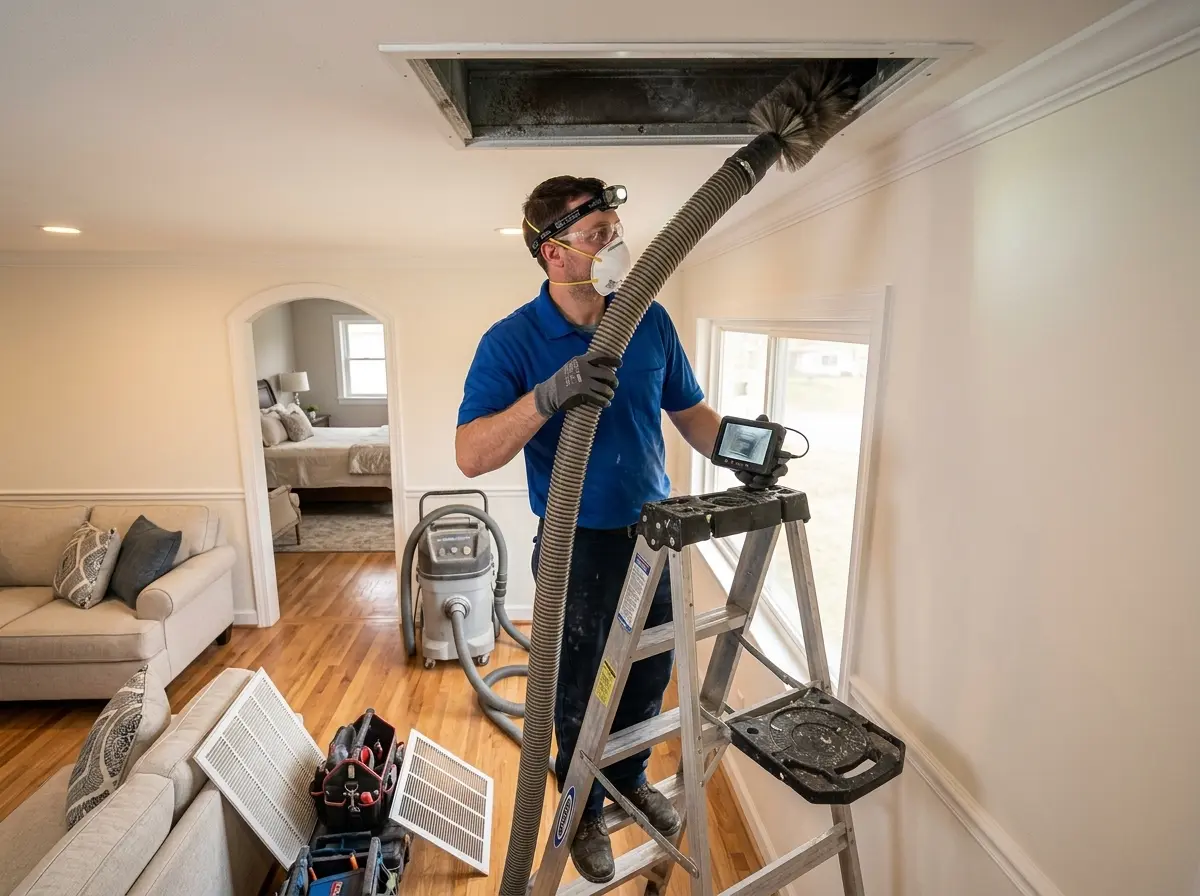
A full visit covers far more than a quick vacuum run. Good source removal cleaning uses rotary brushes across every supply and return branch, paired with a negative pressure vacuum that holds the dust during the work. The coil and fin wash uses a non-toxic solution to clear the Venturi pull zones, while the blower wheel scrub takes off the dust film that drags down airflow. The filter housing should also be checked, with a new gasket and a proper-fit filter put back in place. Any open duct seam needs mastic sealant on the spot, and a final report with photos of before and after conditions gives the owner proof of the work.
Each step kills the path that dust uses to enter and stick inside the duct. After a clean, owners often see a drop of 5 to 15 percent in HVAC energy use, since the blower no longer fights a coated coil and choked filter housing.
Book HVAC Duct Cleaning Before Dust Problems Get Worse
The longer the wait, the more dust hides inside the trunk run, the coil banks, the blower housing, and the supply boots. Tenants notice the dust on their desks first, then the air takes on a stale smell during long heating cycles, then the energy bills creep up month after month, and by that point, a major repair lands at the worst time of the year.
We at Delta Clean Air handle full HVAC duct cleaning, coil cleaning, blower cleaning, UV light installation, and duct sealing across Boston, Cambridge, Brookline, and every Massachusetts town nearby. Our QUADCA-certified team comes out for commercial buildings, schools, medical floors, retail spaces, restaurants, and homes. To stop the dust problem at the source, Contact our team today and book a Venturi-zone inspection before the next heating cycle starts pulling more particles through your hidden gaps.