You turn on your AC on a hot afternoon, only to notice an unexpected drip falling from a ceiling vent. Soon, a damp patch forms near the wall register, leaving you wondering if your cooling system is failing. Left unchecked, water leaking from air ducts can cause expensive ceiling damage, ruin drywall, and trigger toxic mold growth.
Moisture around HVAC ductwork often develops when cold surfaces meet warm, humid air, causing condensation to collect. Damaged insulation and high indoor humidity make this worse. Other possible causes include clogged condensate drain lines, frozen evaporator coils, cracked drain pans, or leaks from nearby roofing and plumbing.
Most of these problems can be corrected once the cause is identified. Depending on the issue, the repair may involve improving insulation, clearing a blocked drain line, restoring proper airflow, or replacing damaged components. Addressing these problems early helps prevent recurring leaks and protects your home’s interior from moisture damage.
Signs of Water Leaking From HVAC Ducts
Moisture problems in your HVAC system can show up in several ways, some more noticeable than others. Watch for these common signs around your vents, ceilings, and exposed ductwork:
- Water stains on ceilings near vents
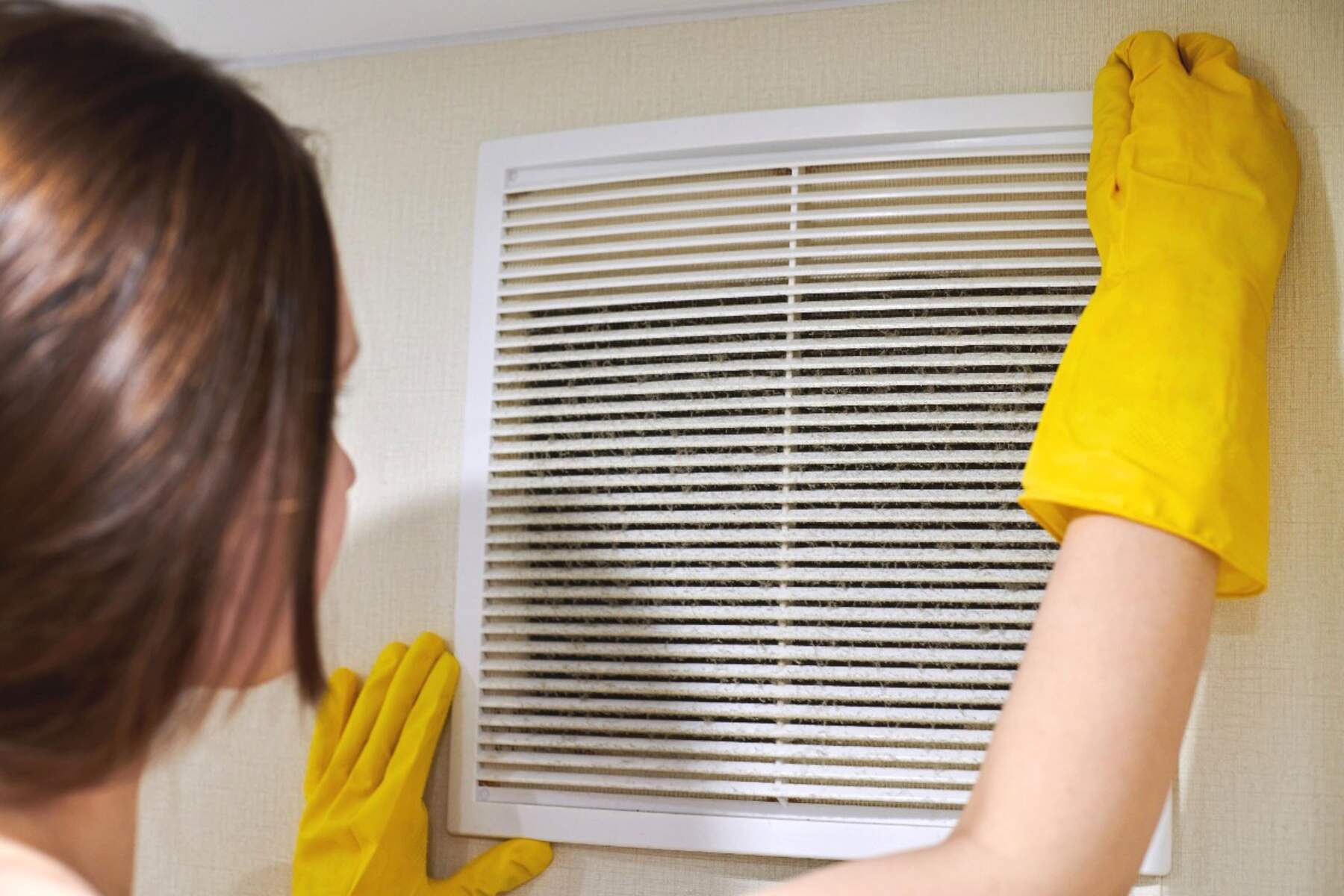
- Dripping or damp air registers
- Musty smells when the AC operates
- Condensation on metal duct surfaces
- Mold growth around vents or nearby walls
- Peeling paint or swollen drywall
Common Causes of Water Leaking From HVAC Ducts
When working correctly, your air conditioner removes moisture from indoor air and directs the collected water through its condensate drainage system. However, several mechanical and environmental issues can cause water to collect around HVAC components or escape from the system. Some involve temperature imbalances or failing parts, while others stem from improper installation or structural problems elsewhere in the home. The following sections explain how these conditions lead to leaks.
Excessive Condensation on Cold Duct Surfaces
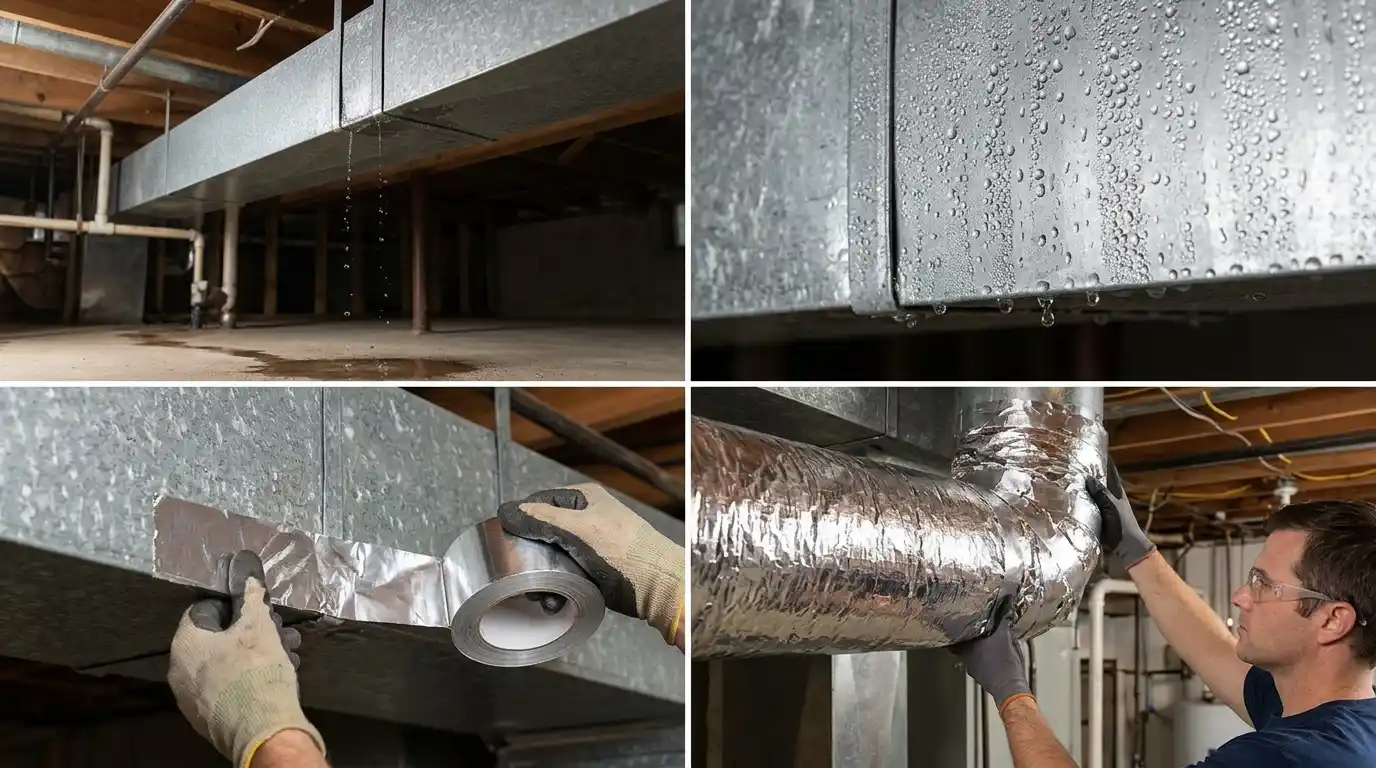
When cold air travels through metal ductwork, it cools the surrounding surfaces. Warm, moisture-filled air coming into contact with these cold surfaces causes condensation to form on the exterior. Known as duct sweating, this process is similar to moisture collecting on a cold drink glass during humid weather.
As condensation builds up, small droplets merge and eventually drip onto nearby ceilings, insulation, or other surfaces. High indoor humidity makes the problem more likely, especially when metal surfaces remain cold for extended periods. Continued dripping can leave damp patches and contribute to moisture damage around the affected area.
Inadequate or Damaged Duct Insulation
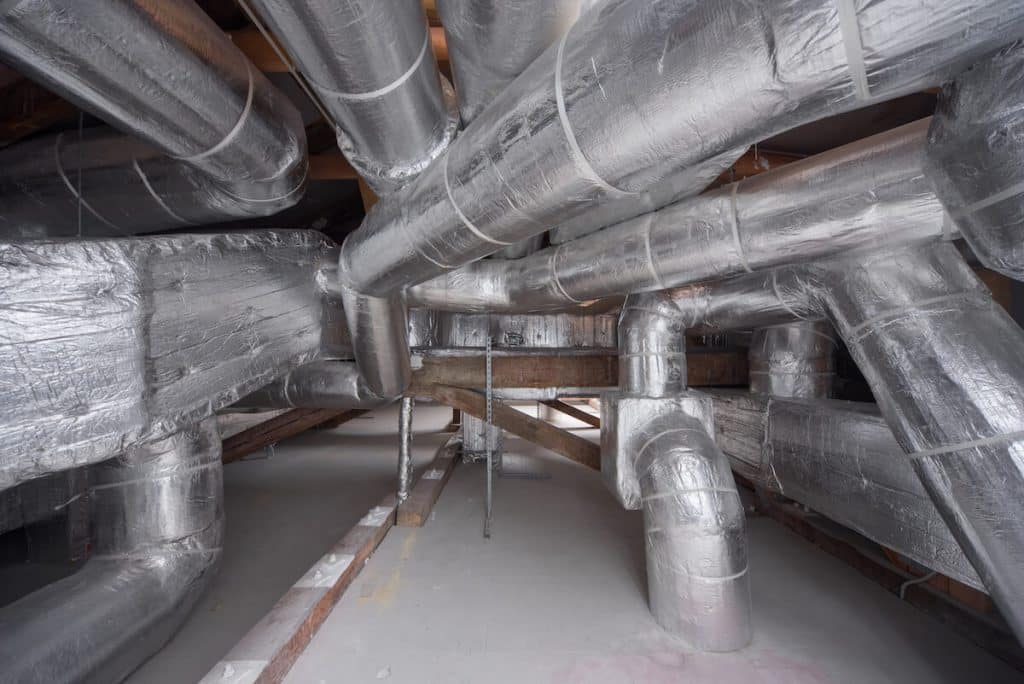
Insulation covers HVAC ductwork to prevent warm indoor air from coming into direct contact with cold metal surfaces. When this protective layer is missing or damaged, exposed sections become more susceptible to condensation. Continued exposure can cause droplets to form and eventually drip from the affected areas.
Common insulation problems include:
- Missing insulation: Leaves sections of metal ductwork completely exposed.
- Compressed insulation: Reduces the material’s ability to resist heat transfer.
- Torn or deteriorated insulation: Creates gaps that expose cold surfaces to warm indoor air.
High Indoor Humidity Around Ductwork
Everyday activities such as cooking, showering, and drying clothes release water vapor into indoor air. Without adequate ventilation, humidity can build up and settle on cooler HVAC surfaces, eventually causing liquid to collect and drip from the affected sections. Keeping indoor relative humidity below 60%, ideally between 30% and 50%, reduces this risk. Proper bathroom and kitchen ventilation, along with a dehumidifier when needed, helps maintain these levels and prevent excess moisture from accumulating around the system.
Blocked AC Condensate Drain Lines
During normal cooling operation, the evaporator coil pulls humidity from indoor air, and the resulting condensate flows into a drain pan before exiting through the condensate line. Dirt, algae, and other debris can gradually accumulate inside this narrow pipe, restricting the flow and preventing proper drainage.
When the passage becomes clogged, collected water can back up into the drain pan and eventually overflow near the indoor unit or surrounding ductwork. Common signs of a blocked condensate line include:
- Standing liquid in the drain pan
- Dripping near the indoor AC unit
- Musty odors around the system
- Unexpected water stains near the air handler
Frozen Evaporator Coils That Leak When Thawed
You may notice reduced airflow from your vents, uneven cooling, or ice forming around the indoor AC unit. These signs often indicate that the evaporator coil has frozen during operation. Restricted airflow from a dirty air filter, blocked return vents, or low refrigerant levels causes the coil temperature to drop below freezing.
When the system shuts off, or the ice begins to melt, the resulting runoff exceeds what the condensate drain pan can handle. If the drainage system is clogged or damaged, excess liquid may spill over and reach nearby HVAC components or ductwork, causing leaks.
Damaged or Overflowing Condensate Drain Pans
Water dripping near the indoor AC unit or collecting beneath the air handler often points to a problem with the condensate drain pan. Positioned below the evaporator coil, this component collects liquid produced during cooling and directs it toward the drain line. Several types of drain pan damage contribute to leaks:
- Cracks: Allow collected liquid to seep through the pan.
- Corrosion: Weakens the metal and creates openings.
- Improper positioning: Prevents liquid from flowing toward the drain outlet.
- Overflow: Occurs when excessive runoff or restricted drainage exceeds the pan’s capacity.
Improperly Installed Ductwork or Drainage Components
Proper HVAC installation requires accurate measurements, secure connections, and correct positioning of every component. When these details are overlooked, drainage lines lose their intended slope, joints remain loose, or unsupported duct sections begin to sag. Such installation faults create low spots and gaps that allow collected liquid to escape or accumulate around the system.
Common installation-related problems include:
- Poor drain line slope: Slows drainage and causes backups.
- Loose connections: Allow liquid to escape through pipe joints.
- Improper duct support: Creates sagging sections where liquid collects.
- Incorrect component placement: Disrupts the intended drainage path.
External Water Intrusion From Roof or Plumbing Leaks
Leaks around HVAC ductwork sometimes originate outside the cooling system. Damaged roof shingles, deteriorated flashing, or poorly sealed roof penetrations allow rainwater to enter the attic and reach nearby duct sections. Plumbing lines running above ceilings also pose a risk when loose fittings, corroded pipes, or damaged joints release liquid near the system. When water travels along ceiling materials, framing, or insulation, it reaches the exterior of nearby ductwork and eventually drips through joints or openings.
Pro Tip: External leaks often continue even when the air conditioner is switched off. Checking whether dripping persists during system downtime helps identify a possible roof or plumbing problem.
How to Detect & Fix HVAC Duct Leaks
Addressing water leaking from air ducts early limits damage to ceilings, insulation, and nearby building materials. Drying wet areas within 24 to 48 hours prevents mold from developing, making timely leak detection and repair important. The steps below explain how to trace the source and address the affected components.
Identify Where the Water Is Coming From
Start by noting when dripping occurs. Moisture that appears only while the AC runs often points to condensation or a drainage issue. Leaks that continue after shutdown may come from nearby plumbing or the roof.
Use these four tools to inspect the affected area and narrow down the source:
| Tool | What It Reveals | What It Indicates |
| Bright Flashlight | Droplets, wet seams, rust, and damp insulation | Visible moisture and its likely path |
| Digital Hygrometer | Relative humidity around ductwork | Readings above 60% indicate conditions that favor duct condensation |
| Thermal Imaging Camera | Unusual temperature patterns around concealed areas | Hidden moisture that needs further inspection |
| Pinless Moisture Meter | Moisture inside drywall, plaster, and wood | Damp areas that may indicate where leaking water is spreading from the ducts |
Check Duct Surfaces for Condensation
Inspect exposed metal duct sections for moisture forming evenly across the surface or collecting repeatedly in the same spots. Surface sweating usually appears as scattered droplets, while water escaping through a damaged connection often leaves concentrated wet marks near joints or seams.
Inspect Duct Insulation for Damage
Take a closer look at the insulation around your ductwork, especially near joints, bends, and areas where you have noticed dripping. Check whether it still fits firmly around the ducts or has pulled away, become loose, or developed damp spots. Pay attention to any exposed metal, since cold surfaces in contact with warm indoor air can cause condensation to form.
Clear Clogged Condensate Drain Lines
Once you locate the condensate drain line near your indoor AC unit, you can remove an accessible blockage with a wet/dry vacuum. Follow these steps to clear the buildup and restore proper drainage:
- Find the end of the PVC drain line where water exits your home
- Place the vacuum hose over the outlet and run it for a few minutes to pull out dirt and algae
- Run the AC and confirm that water flows freely through the line
Avoid pushing wires or other objects into the pipe, as they can damage its walls. Do not use bleach or harsh drain cleaners, which can harm HVAC components.
Restore Airflow and Address Frozen Coils
Restricted airflow often results from a clogged filter or blocked vents. Start with these simple steps to improve air circulation and allow the evaporator coil to return to its normal temperature:
- Replace the air filter: Install a clean filter if the existing one is clogged.
- Open blocked vents: Keep supply registers and return grilles clear of furniture, rugs, and other obstructions.
- Thaw the frozen coil: Turn off cooling mode and let the ice melt naturally. Never chip it away.
When the coil has thawed, restart the AC and monitor its operation. If freezing returns despite proper airflow, contact an HVAC technician to check refrigerant levels and mechanical components.
Repair Damaged Drain Pans and Ductwork
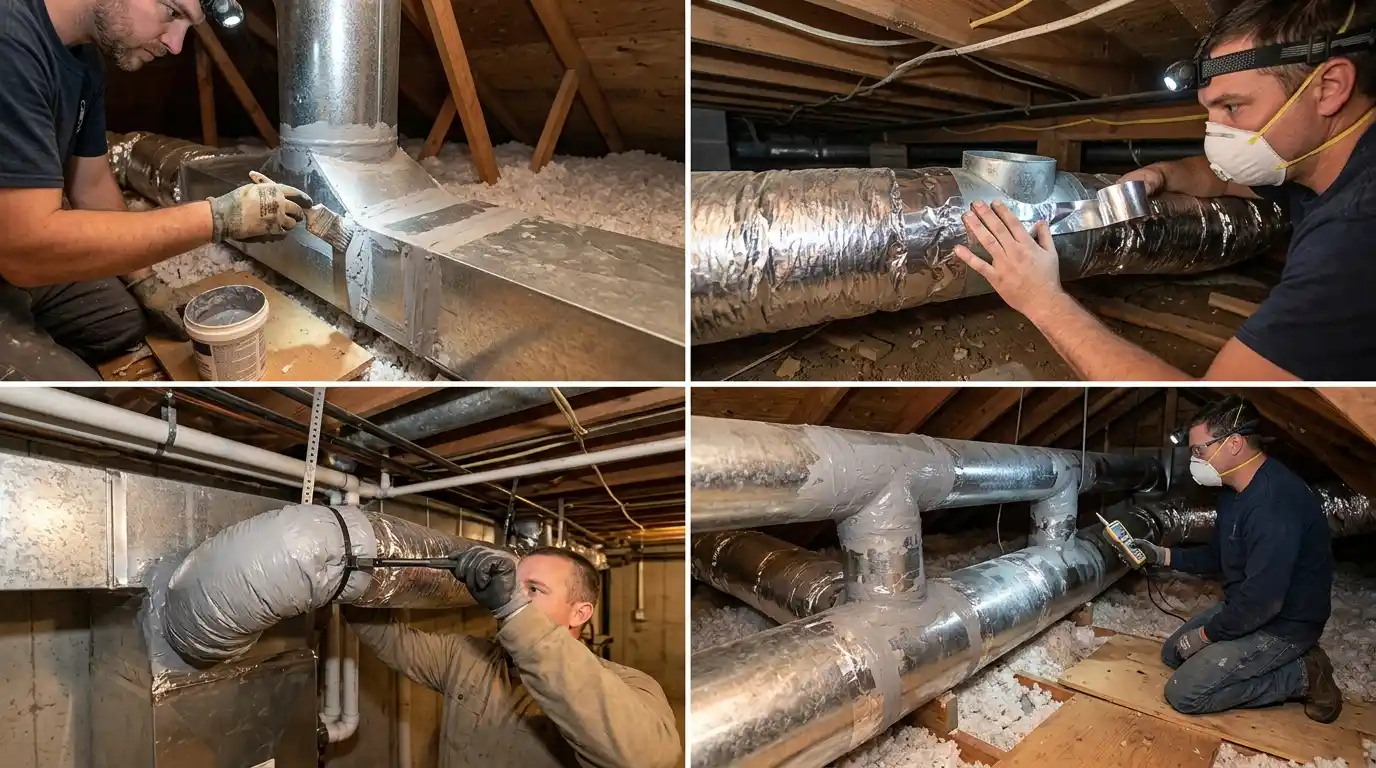
With the drainage and airflow issues addressed, turn your attention to any damaged HVAC components that still need repair. Minor problems, such as loose external duct connections, may only require resealing with approved HVAC foil tape or mastic sealant. Cracked pans, corroded metal, and structural damage often require professional repairs.
When to Call an HVAC Professional for Water Leaking From Ducts
Some HVAC leaks require more than routine cleaning or minor adjustments. If water keeps dripping despite your troubleshooting, or the source remains unclear, an HVAC technician can inspect the system and identify underlying faults. Professional attention is especially important in these situations:
- Recurring leaks: Dripping continues despite clearing the drain line and correcting airflow restrictions.
- Repeated coil freezing: Ice keeps forming even after replacing the air filter and clearing blocked vents.
- Hidden duct damage: Leaks originate inside walls, ceilings, or inaccessible attic sections.
- Extensive water damage: Persistent dampness has affected ceilings, insulation, or surrounding building materials.
- Refrigerant or electrical issues: Suspected refrigerant leaks, faulty wiring, or malfunctioning components require specialized diagnosis.
Frequently Asked Questions
Is it normal to find water inside HVAC ductwork?
No. Air ducts carry conditioned air, so standing water inside them usually indicates a leak, drainage problem, or moisture intrusion. Normal AC condensation should collect in the drain pan and leave through the condensate line.
Why does water drip from only one air vent?
Localized dripping often points to a problem affecting that particular duct branch or vent connection. Differences in insulation, air leakage, and surrounding humidity can cause one area to collect more moisture than others.
Should I turn off my AC if water is dripping from a vent?
Yes, especially if water is actively dripping onto ceilings, floors, or nearby electrical fixtures. Turn off cooling at the thermostat and arrange an inspection before running the system again.
Does water inside air ducts affect indoor air quality?
Yes. Standing water and persistent dampness inside ductwork create conditions for mold and microbial growth. As the HVAC system circulates air, contaminants from affected areas can spread into your home’s living spaces.
Should I replace my ductwork after a water leak?
Complete duct replacement is not always necessary. If the damage is limited to one section, targeted repairs or insulation replacement may be sufficient. Extensive corrosion, damaged duct liners, or widespread contamination may justify replacing affected sections.
Can a condensate pump cause water to leak near HVAC ducts?
Yes. Homes with condensate pumps rely on them to move collected AC water to a suitable drain point. A failed pump, blocked discharge hose, or faulty float switch can cause water to overflow near the indoor unit.
Schedule an HVAC Duct Inspection to Locate the Source of Water Leaks
Water leaking from HVAC ducts often points to condensation, drainage problems, damaged insulation, or faulty components. Finding the source is the first step toward preventing further leaks and moisture damage. Prompt repairs also help protect your ductwork, ceilings, and indoor air quality. Regular maintenance keeps your HVAC system in better condition and reduces the risk of recurring moisture problems.
Delta Clean Air helps property owners maintain clean, dry ductwork by addressing moisture at its source. Our team removes accumulated dirt and debris, then cleans and sanitizes affected duct surfaces to address contamination. Contact Delta Clean Air today to schedule a professional air duct inspection and find the source of water leaks.