This is a practical guide for Boston renters, condo owners, landlords, and HOA boards navigating Massachusetts dryer vent regulations, shared vent systems, and the question nobody wants to answer: who is actually responsible?
Why Dryer Vent Cleaning Is a Different Conversation in Boston Condos and Apartments
Ask a homeowner in a single-family house in Newton or Needham about dryer vent cleaning, and the answer is simple: it is their responsibility, they call a professional, and the job is done. Ask the same question in a Back Bay condo building or a Southie triple-decker, and things immediately get more complicated.
Who owns the vent that runs through a shared wall? Does the condo association cover the rooftop termination? What does Massachusetts law actually require? And if a clogged vent causes a fire, who is liable?
These questions come up constantly in Boston’s dense housing stock.
The Massachusetts 10th edition building code, which became effective October 11, 2024, tightened dryer vent installation and exhaust requirements statewide. The Massachusetts Sanitary Code already requires that all gas and electric clothes dryers be vented outdoors.
NFPA data shows that failure to clean dryer vents is the leading contributing factor in residential dryer fires in the United States, accounting for roughly 34 percent of incidents.
This guide explains the rules, access challenges, and responsibility questions in plain language for Boston condos and apartments.
Read More: Why Dryer Vent Cleaning is Important for Fire Prevention
What Massachusetts Law and Boston Codes Actually Require
The Massachusetts Sanitary Code
The Massachusetts Sanitary Code (105 CMR 410.170(B)) requires all electric and gas clothes dryers to be vented outdoors. The only exception is for ventless dryers that are specifically listed and labeled by the manufacturer.
This applies to all residential properties, including Boston condos and apartments. A blocked or non-functioning dryer vent may be considered a code violation affecting occupant safety.
Under Massachusetts General Laws Chapter 111 Section 127L, tenants in properties with certified violations may have legal remedies, including rent withholding, if proper procedures are followed.
The Massachusetts 10th Edition Building Code (Effective October 2024)
The updated residential building code reinforces strict dryer exhaust requirements. Dryer ducts must:
- Be independent from all other systems
- Terminate outdoors
- Not exceed 35 feet in total length
- Deduct 2.5 feet per 45-degree elbow
- Deduct 5 feet per 90-degree elbow
In Boston’s older buildings, especially pre-war and converted properties, many systems exceed these limits due to long retrofit duct runs and multiple bends.
The City of Boston Fire Prevention Division
The Boston Fire Prevention Division requires licensed technicians for exhaust vent cleaning under NFPA-based standards. Technicians must complete training, demonstrate field experience, and renew certification every three years.
This matters because using unlicensed cleaners can create liability and documentation issues if a fire or inspection occurs later.
Key Regulation Summary:
105 CMR 410.170(B) requires all dryers to vent outdoors. The 10th edition building code limits ducts to 35 feet with reductions for bends. Boston Fire Prevention requires licensed technicians for compliant cleaning and inspection under NFPA standards.
The Fire Risk in Multi-Unit Buildings Is Not the Same as in a Single House
Dryer fires are a known national risk, but the structure of multi-unit buildings makes the hazard more complex.
What the Numbers Show
NFPA data shows thousands of dryer-related home fires annually in the U.S., resulting in deaths, injuries, and significant property damage. Failure to clean is involved in roughly one-third of incidents, and lint is the most common ignition source.
In a single-family home, the fire path is usually isolated. In a multi-unit building, shared vent stacks allow heat, smoke, and flame to travel between units, increasing the risk of spread before detection.
The Airflow Problem in Shared Systems
Even without fire, clogged shared vent systems create widespread building issues.
When one section of a shared stack becomes restricted, it creates back-pressure affecting multiple units. Drying times increase, moisture builds inside ducts, and mold or corrosion can develop.
Backdraft dampers also become stressed, reducing system performance across multiple apartments.
This is why coordinated maintenance is more effective than individual cleaning in multi-unit buildings.
Boston-Specific Context:
Boston’s housing includes many pre-war triple-deckers, mid-century apartments, and converted homes. Many dryer vents were retrofitted into structures not designed for them, resulting in long runs, sharp bends, and non-standard routing that increases lint buildup.
Condos vs. Rental Apartments: How the Responsibility Question Works Differently
In a Rental Apartment
In most Boston rentals, landlords are responsible for maintaining structural systems, including dryer vent ductwork if provided with the unit.
Tenants are responsible for cleaning lint traps after every use.
Responsibility for duct cleaning depends on the lease. If the lease is silent, maintenance of structural vent systems generally falls to the landlord under habitability standards.
Tenants should report slow drying, heat buildup, or burning smells immediately, regardless of responsibility assignment, because these are safety issues.
In a Condo
Condo responsibility is defined by master deeds and bylaws, which divide ownership into:
- Unit elements
- Limited common elements
- Common elements
Dryer vent systems often span all three categories.
Typically:
- Transition ducts = unit responsibility
- In-wall ducts serving one unit = often limited common elements
- Shared vertical stacks = common elements maintained by HOA
Older condo conversions in Boston often have unclear documentation, which leads to disputes about responsibility.
Here is a general framework for how responsibility typically falls across different vent segments, subject to specific lease or governing document terms:
| Vent Segment | Renter | Condo Owner | Building/HOA |
| Lint trap (inside dryer) | Tenant cleans | Owner cleans | Not responsible |
| Transition hose (dryer to wall) | Tenant/landlord | Owner | Not responsible |
| In-unit duct run (inside walls) | Landlord | Owner | Possibly (bylaws) |
| Shared vertical riser/stack | Not responsible | Not responsible | HOA / management |
| Rooftop or exterior termination | Not responsible | Not responsible | HOA / management |
| Backdraft damper (at unit) | Landlord | Owner or HOA | Sometimes (bylaws) |
Important Note:
This table reflects general practice and does not constitute legal advice. Actual responsibility depends on lease terms, master deeds, or condo bylaws. When unclear, a written agreement is the safest approach.
Access Challenges in Boston Multi-Unit Buildings
Shared Vertical Stacks
Shared vent systems require coordinated cleaning across multiple units and roof access. Cleaning only one segment often leaves airflow issues unresolved.
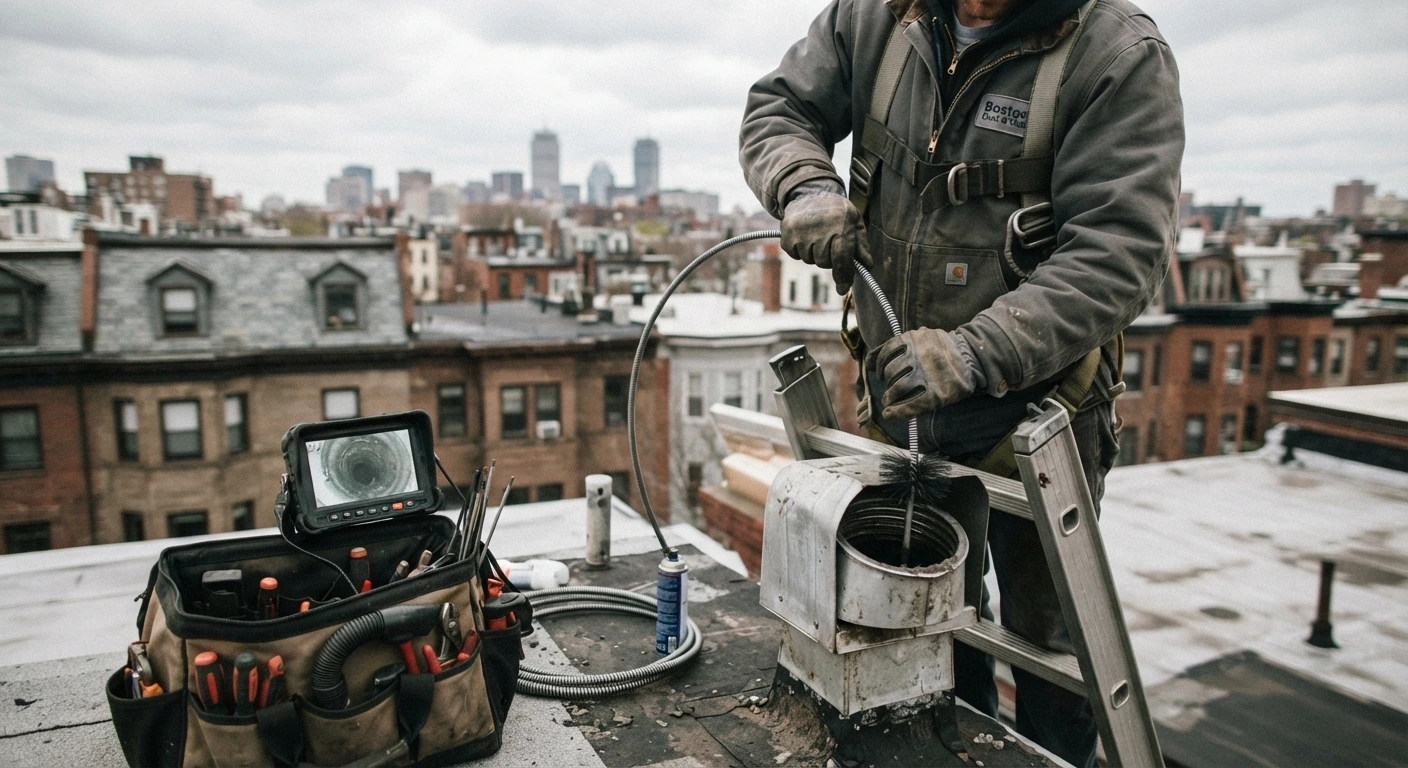
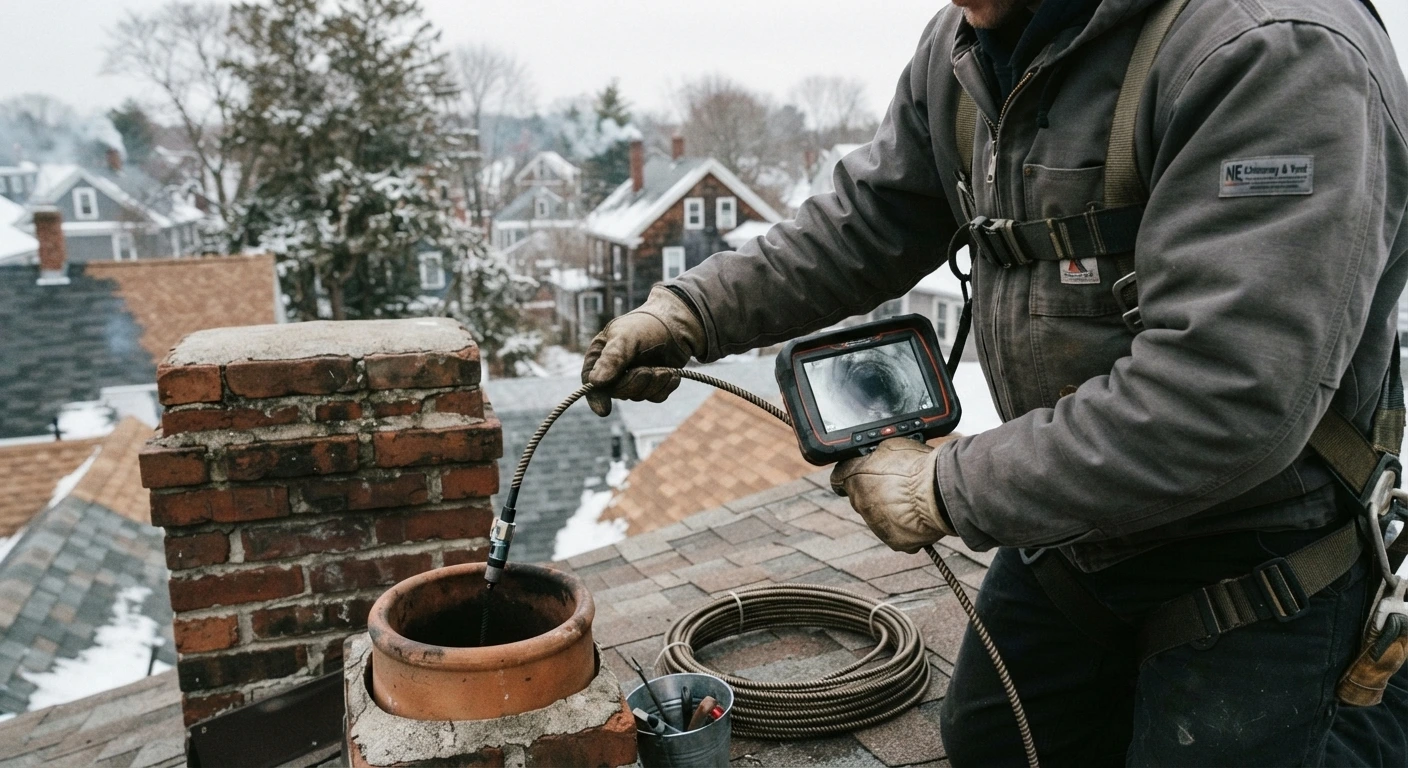
Rooftop Terminations
Roof vent caps can become blocked by lint buildup, nesting, or weather conditions. Many older buildings still have non-compliant guards that restrict airflow and worsen buildup.
Long Horizontal Runs
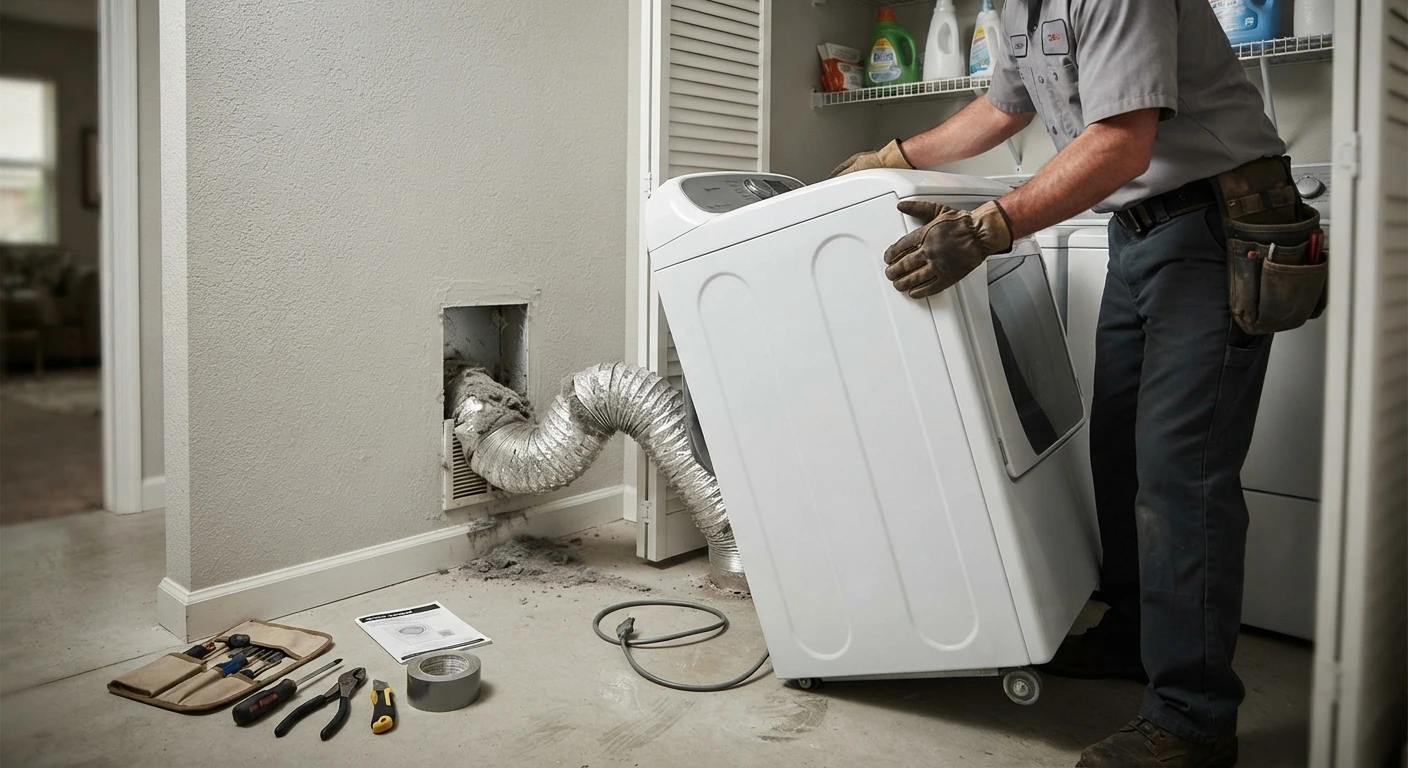
Older Boston buildings often include long horizontal duct runs with multiple bends. These require professional equipment to fully clean.
Flexible ducting inside walls is especially problematic because lint adheres more easily to corrugated surfaces and accumulates faster than in rigid metal ducts.
Warning Signs That Your Boston Condo or Apartment Dryer Vent Needs Cleaning:
Long drying times, hot, damp clothes, excessive dryer heat, burning or musty smell, weak or no exterior airflow, lint visible outside vent cap, or premature cycle shutoff.
Read More: 8 Signs You Need to Clean Your Dryer Vent
What HOA Boards and Property Managers in Boston Need to Know
Liability Exposure Without a Maintenance Policy
Without documented maintenance, condo associations may face liability after a dryer fire investigation, especially if shared systems were neglected.
Establishing a Building-Wide Cleaning Schedule
Annual cleaning is the standard baseline. Buildings with shared stacks or high usage may require more frequent service.
A written policy should define:
- Frequency
- Responsibility allocation
- Cost distribution
- Documentation requirements
Documentation and Record-Keeping
Every cleaning should include a report with system condition, work performed, and any deficiencies. These records support insurance claims and maintenance accountability.
What Professional Dryer Vent Cleaning in a Boston Condo Actually Involves
The Inspection Phase
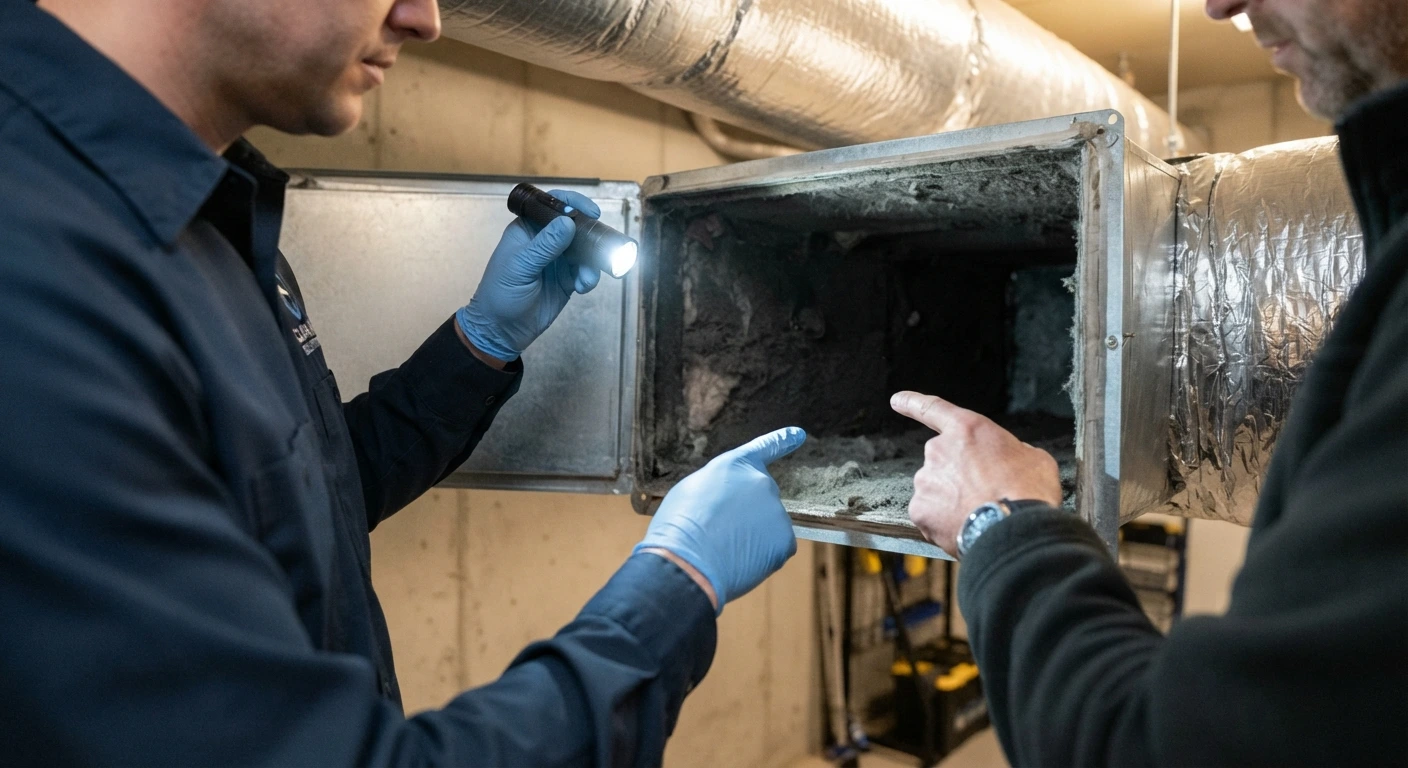
Technicians assess vent layout, identify shared vs. individual runs, and evaluate system condition. Boston’s older buildings often require tracing undocumented vent paths.
The Cleaning Process
Professionals use rotary brush systems and high-powered vacuums to remove lint across the full duct length. This ensures lint is extracted, not pushed deeper into the system.
Exterior Cap Inspection and Cleaning
Exterior caps are inspected for blockage, corrosion, or failed dampers. Cold weather can cause additional restrictions in Boston’s climate.
Post-Cleaning Airflow Verification
Airflow is tested to confirm the system is functioning properly. Reduced airflow after cleaning indicates structural issues such as crushed ducting or disconnected sections.
How Often Should Boston Condo and Apartment Dryer Vents Be Cleaned?
Annual cleaning is the recommended baseline.
More frequent cleaning may be needed for:
- Shared vent systems
- High-occupancy buildings
- Long or complex duct runs
- Flexible duct installations
- Buildings with heavy laundry usage
Massachusetts safety guidance also recommends regular exterior vent inspection, often twice per year.
Read More: Dryer Vent Cleaning Frequency: How Often to Schedule It
Keep Your Boston Building Safe with Delta Clean Air: Certified Dryer Vent Cleaning for Condos, Apartments, and Multi-Unit Properties
Delta Clean Air is Boston’s certified air duct and dryer vent cleaning company, serving residential and commercial properties across the city from their Boston base at 529 Main Street.
Whether the property is a Back Bay condo, a Southie triple-decker, a Dorchester apartment building, or a property management portfolio covering dozens of units across Greater Boston, Delta Clean Air’s certified technicians know the access challenges, building types, and regulatory requirements specific to this market.
Dryer vent cleaning in Boston condos and apartments is not a simple job that any general handyman can complete to the standard the city and the Massachusetts code require.
The combination of shared vent stacks, long runs through building infrastructure, rooftop access, and documentation needs means the work requires technicians with the right equipment and the right credentials for the Boston market.
Delta Clean Air’s Dryer Vent Services for Boston Multi-Unit Buildings
Individual unit dryer vent cleaning for condo owners and apartment tenants across Boston and Greater Boston
Residential dryer vent cleaning with certified technicians and full post-cleaning airflow verification
Commercial dryer vent cleaning for laundromat and multi-unit building laundry facilities requiring higher-frequency service
Property management annual cleaning programs for HOA boards and property managers who need consistent documentation and scheduling across multiple properties
Dryer vent repair and replacement for systems with crushed duct, disconnected sections, non-compliant flexible duct, or failed exterior caps
Written service documentation for every job, suitable for condo association maintenance records and insurance files
Eco-friendly, non-toxic cleaning approach that does not introduce chemical residues into your building’s exhaust systems
Coverage across Boston neighborhoods, including Back Bay, South End, Beacon Hill, South Boston, Dorchester, Jamaica Plain, Charlestown, Cambridge, Somerville, and Greater Boston
If you manage a Boston condo building and want to establish a compliant annual cleaning schedule, or if you are a unit owner whose dryer is performing poorly and suspect a vent restriction, the first step is an assessment. Call us to schedule your cleaning or building assessment.